
Easy Caterpillar Playdough Tray for Fine Motor Skills
Affiliate and Referral links are used below to promote products I love and recommend. I receive a commission on any purchases made through these links. Please see my disclosure policy for more details. As an Amazon Associate, I earn from qualifying purchases.
This simple caterpillar playdough tray invites kids to create their own colorful caterpillars while strengthening important fine motor skills through hands-on fun. With just a few colors of playdough and a collection of loose parts, children can build, decorate, and imagine endless caterpillar creations. There is no right or wrong way to play, making this an open-ended activity that encourages creativity, exploration, and learning through play.
Build a Caterpillar Playdough Tray Supplies
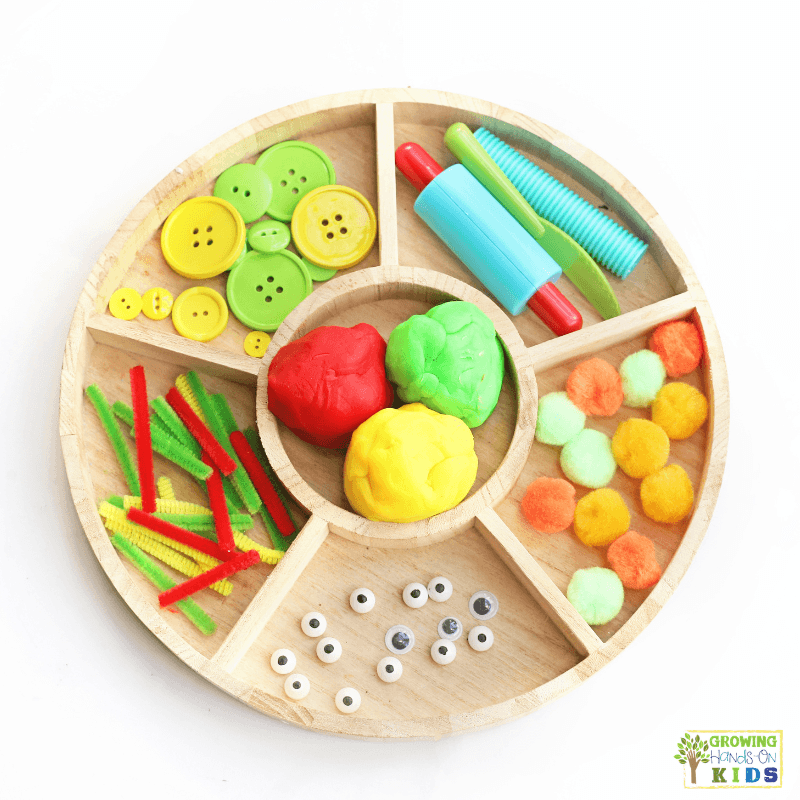
- Green playdough
- Yellow playdough
- Red playdough
- Playdough tools
- Pom poms
- Googly eyes or candy eyes
- Buttons
- Pipe cleaners
Directions:
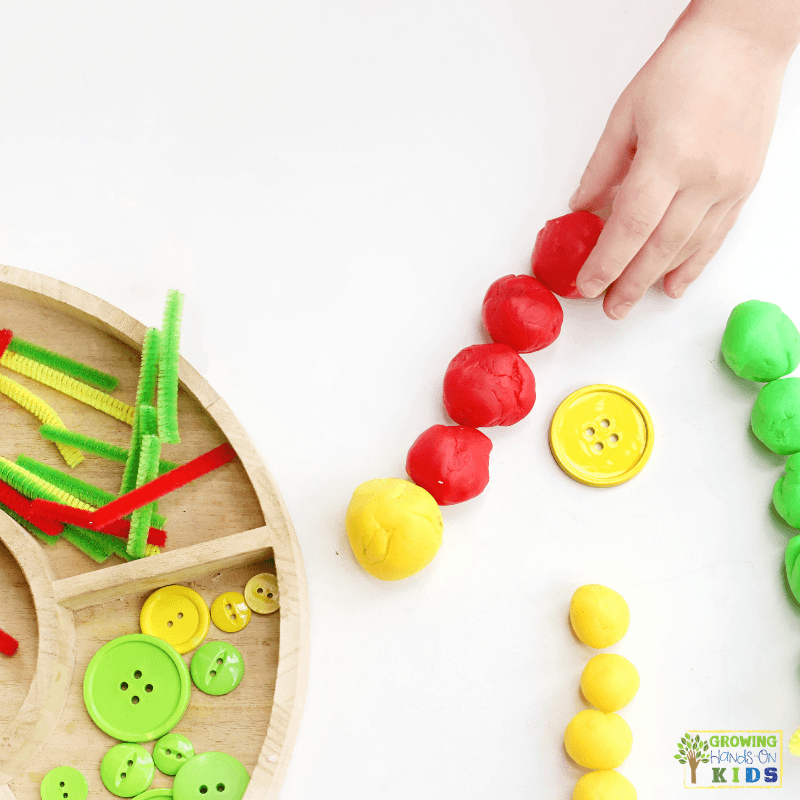
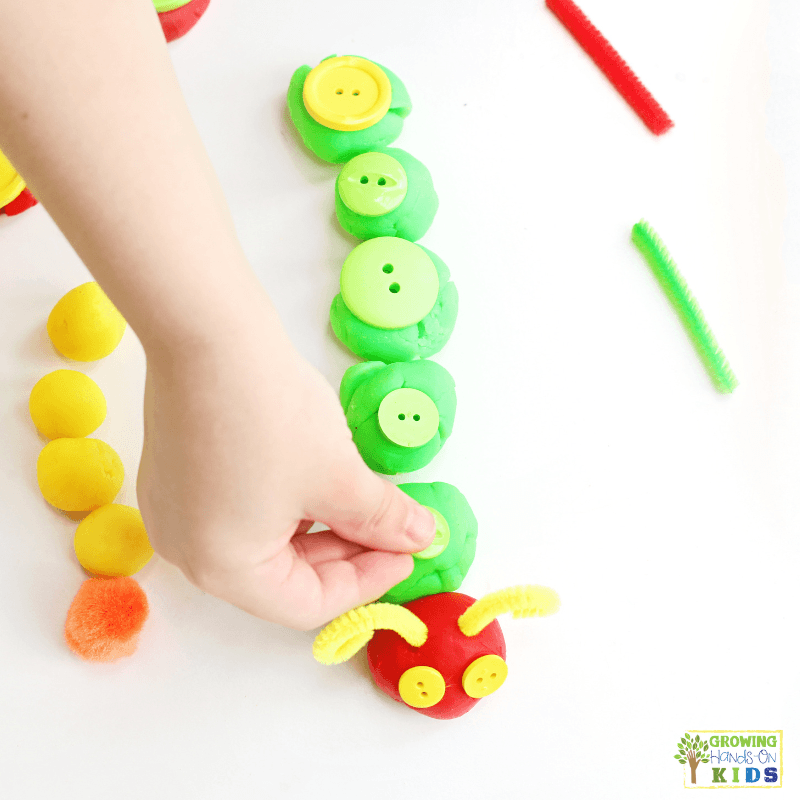
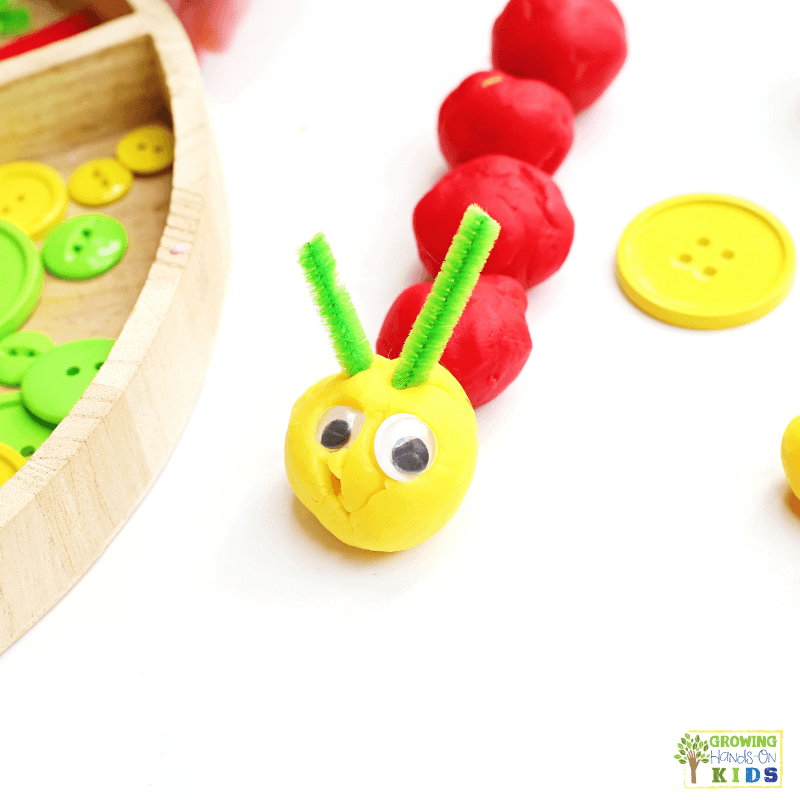
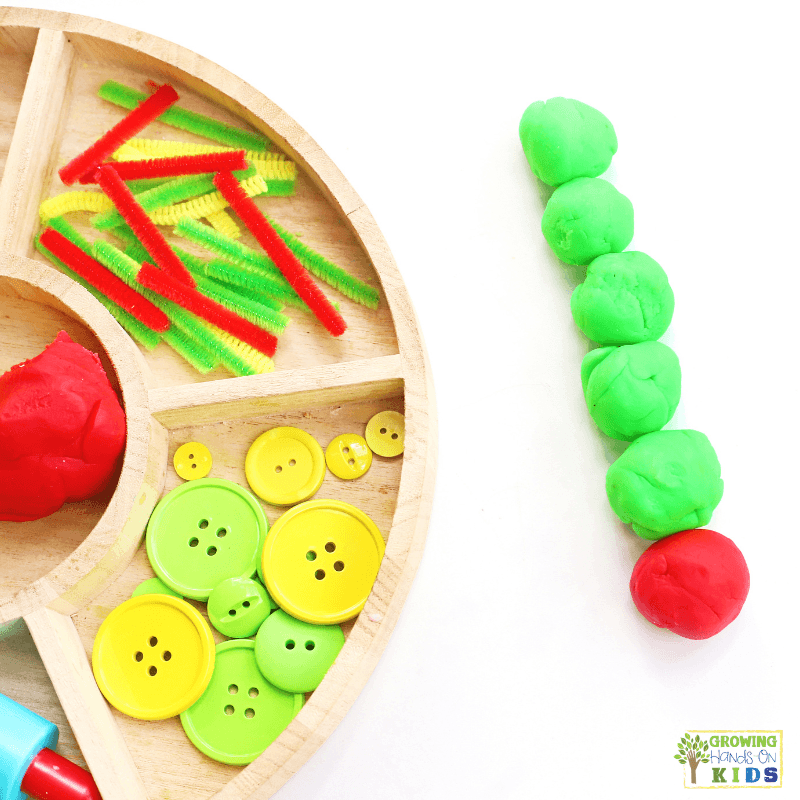
Kids start by rolling small balls of playdough and lining them up to form the body of a caterpillar. They can mix colors to create patterns or build long, wiggly caterpillars
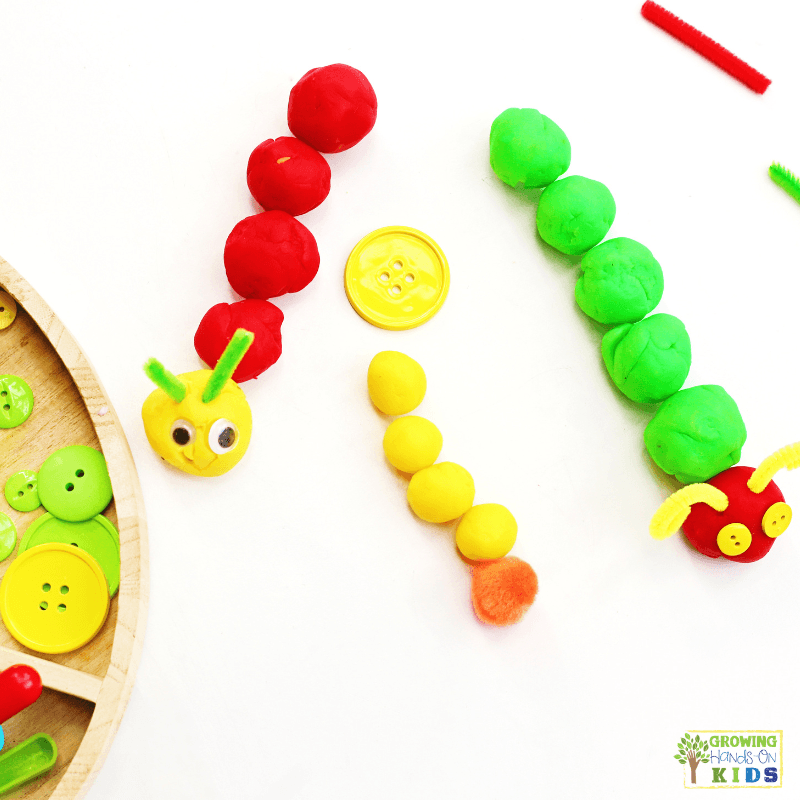
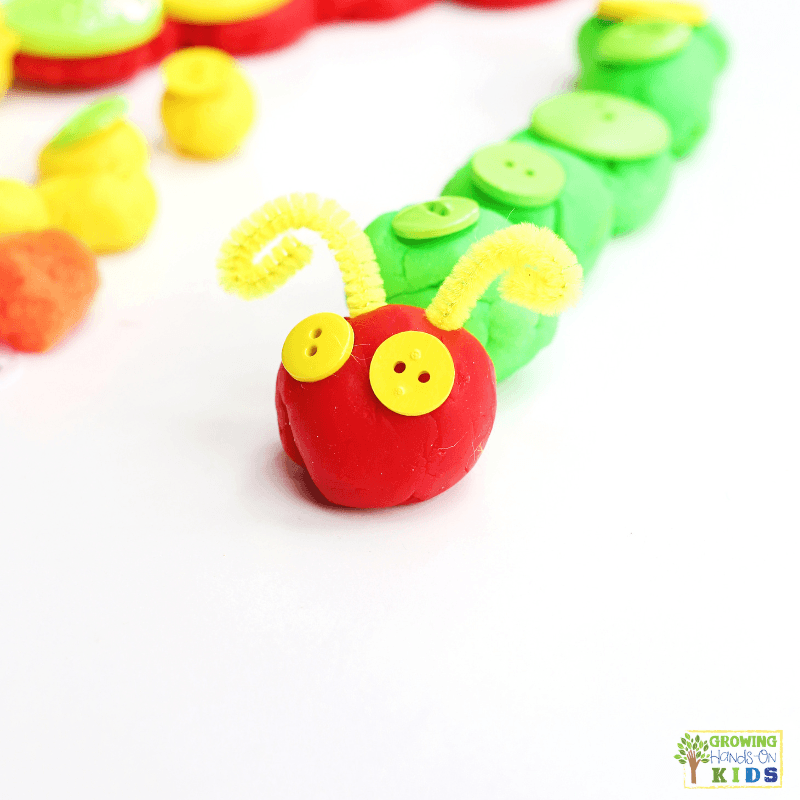
Once the caterpillar body is built, children can decorate it using the loose parts. Pom poms and buttons can become body segments, while googly eyes or candy eyes bring their caterpillar to life. Pipe cleaners can be bent into silly antennae and pressed into the playdough head.
Kids may also use playdough tools to flatten pieces, create textures, or make tiny leaves and flowers for their caterpillar’s garden. Each creation can look completely different, which makes the activity fun to repeat again and again.
Benefits
- Strengthens fine motor skills through rolling, pinching, squeezing, and placing small items
- Encourages creativity and imaginative play as children design unique caterpillars
- Builds early math skills through counting body segments, creating patterns, and comparing sizes
- Develops hand strength needed for writing, cutting, and other everyday tasks
- Promotes bilateral coordination by using both hands together during play
- Improves eye-hand coordination while placing loose parts onto the playdough
- Provides sensory exploration with soft playdough and a variety of textures
- Encourages problem-solving as kids decide how to build and decorate their caterpillars
- Supports language development by talking about colors, body parts, insects, and nature
- Inspires storytelling as children imagine where their caterpillars are crawling and what adventures they are having
- Offers a calming, screen-free activity that encourages focus and sustained attention
- Invites open-ended play that can be enjoyed again and again with new designs each time
Where to Set Up This Caterpillar Playdough Tray for Fine Motor Skills
One of my favorite things about playdough trays is how easy they are to set up just about anywhere! Whether you’re at home, in the classroom, or working one-on-one with a child, this caterpillar activity is simple to adapt to your space and your goals.
At Home
- Set it up on the kitchen table for an easy afternoon activity.
- Create a nature-themed invitation to play by adding a few real leaves, flowers, or twigs collected from outside.
- Place everything in a shallow tray or bin so kids can easily access the materials and clean up afterward.
- Pair the activity with a favorite caterpillar or butterfly book to encourage early literacy and imaginative play.
In the Classroom
- Add the tray to your spring, insect, or butterfly learning center.
- Include picture cards of caterpillars and butterflies for children to observe and recreate.
- Encourage students to count caterpillar body segments, create color patterns, or sort loose parts by color or size.
- Set out enough materials for small groups to encourage cooperative play, sharing, and conversation.
During Therapy Sessions
- Use the activity to target hand strength through rolling, squeezing, pinching, and flattening the playdough.
- Encourage pincer grasp and in-hand manipulation skills while picking up and placing small loose parts.
- Practice bilateral coordination by having children stabilize the playdough with one hand while manipulating tools with the other.
- Incorporate language goals by describing colors, sizes, textures, and the parts of a caterpillar.
- Challenge visual perceptual skills by having children copy simple caterpillar patterns or recreate a model.
- Adapt the activity for each child’s developmental level by changing the size of the playdough balls, the types of loose parts, or the complexity of the design.
No matter where you use it, this caterpillar playdough tray provides a fun, hands-on way for children to build important developmental skills while enjoying creative, open-ended play.
Build a Caterpillar Playdough Tray
Materials
- Green playdough
- Yellow playdough
- Red playdough
- Playdough tools
- Pom poms
- Googly eyes or candy eyes
- Buttons
- Pipe cleaners
Instructions
- Kids start by rolling small balls of playdough and lining them up to form the body of a caterpillar. They can mix colors to create patterns or build long, wiggly caterpillars
- Once the caterpillar body is built, children can decorate it using the loose parts. Pom poms and buttons can become body segments, while googly eyes or candy eyes bring their caterpillar to life. Pipe cleaners can be bent into silly antennae and pressed into the playdough head.
- Kids may also use playdough tools to flatten pieces, create textures, or make tiny leaves and flowers for their caterpillar’s garden. Each creation can look completely different, which makes the activity fun to repeat again and again.
You May Also Like:

Heather Greutman, COTA
Heather Greutman is a Certified Occupational Therapy Assistant with experience in school-based OT services for preschool through high school. She uses her background to share child development tips, tools, and strategies for parents, educators, and therapists. She is the author of many ebooks, including The Basics of Fine Motor Skills, The Basics of Pre-Writing Skills, and co-author of Sensory Processing Explained: A Handbook for Parents and Educators.