Pumpkin Bowling: A Fun Fall Gross Motor Activity for Kids
Affiliate and Referral links are used below to promote products I love and recommend. I receive a commission on any purchases made through these links. Please see my disclosure policy for more details. As an Amazon Associate, I earn from qualifying purchases.
This Fall Pumpkin Bowling activity is a simple seasonal gross motor activity that combines movement, coordination, counting, and plenty of fun!
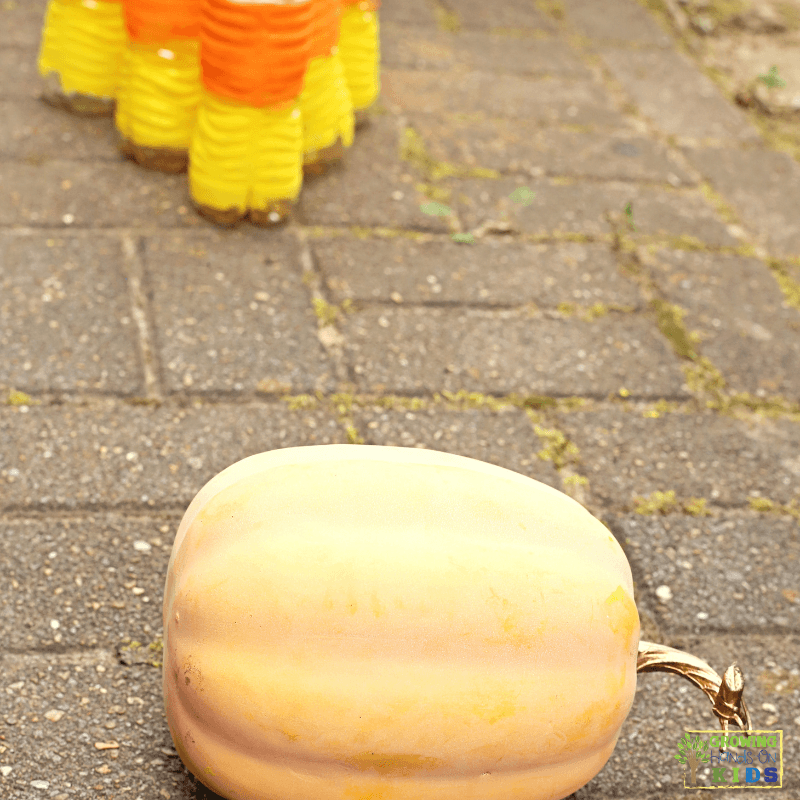
Instead of a traditional bowling ball, kids get to roll a small pumpkin toward colorful candy corn bowling pins. Because pumpkins aren’t perfectly round, you never quite know which direction they might roll, which adds an extra challenge for motor planning and coordination.
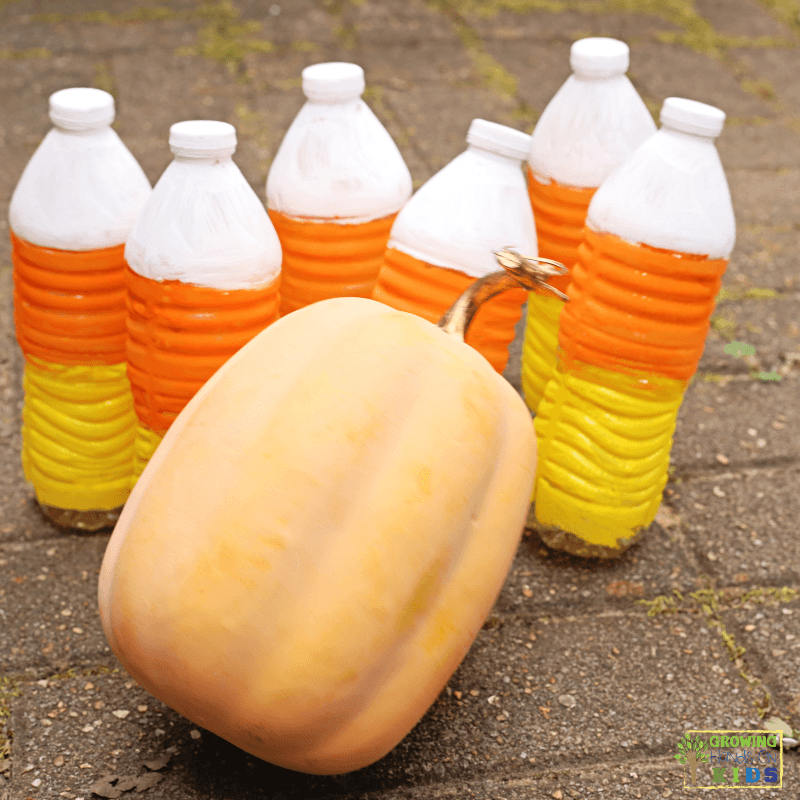
This activity is easy to set up outdoors on a sidewalk, driveway, playground, or other flat surface. You can also bring it indoors with a small artificial pumpkin or soft ball.
Supplies
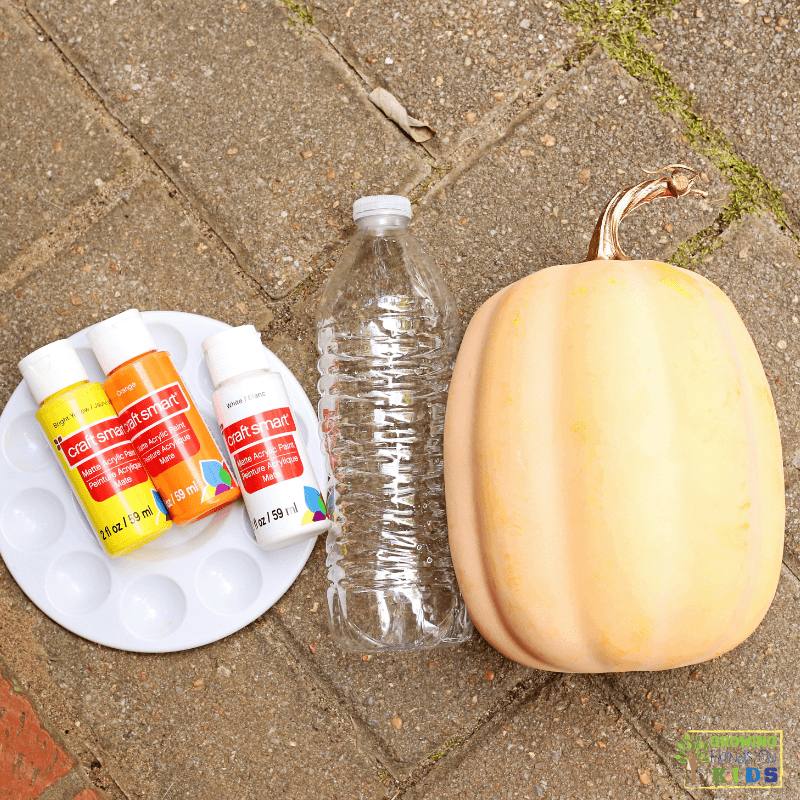
- Empty plastic water bottles
- White, orange, and yellow paint
- Paintbrushes
- Small pumpkin for bowling
Instructions
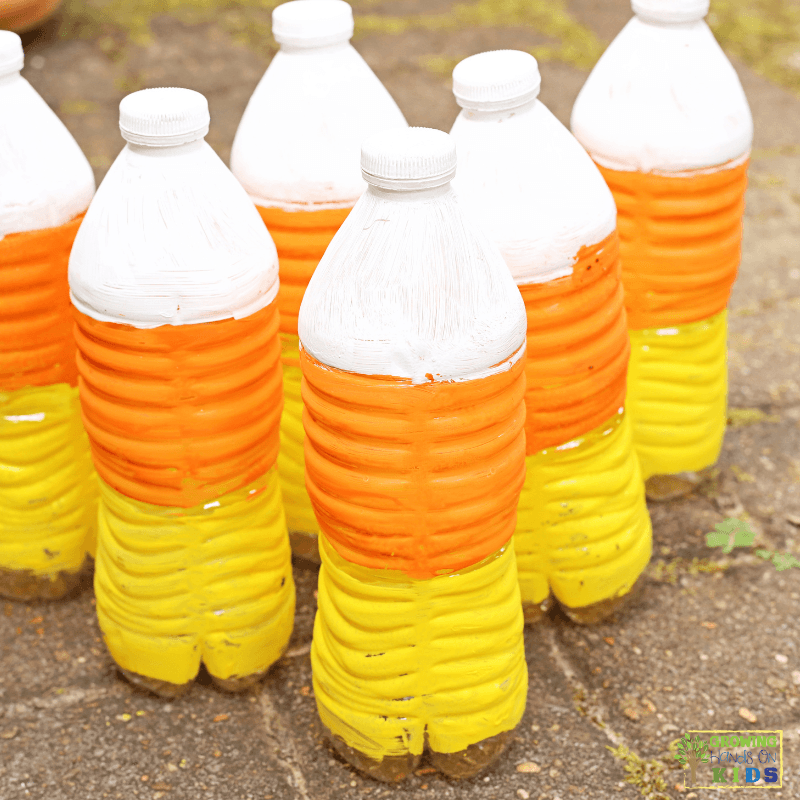
- Prepare the bottles: Remove the labels from six empty water bottles and make sure they are clean and dry.
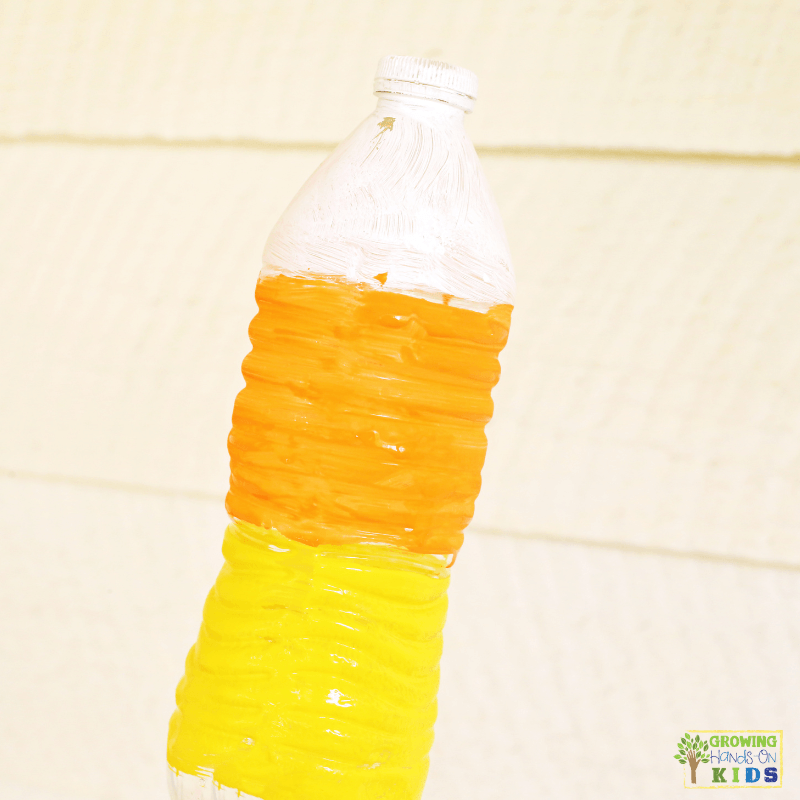
- Paint the bottles: Paint the bottom portion of each bottle yellow, the middle orange, and the top white to create a candy corn-inspired design. Allow the paint to dry completely.
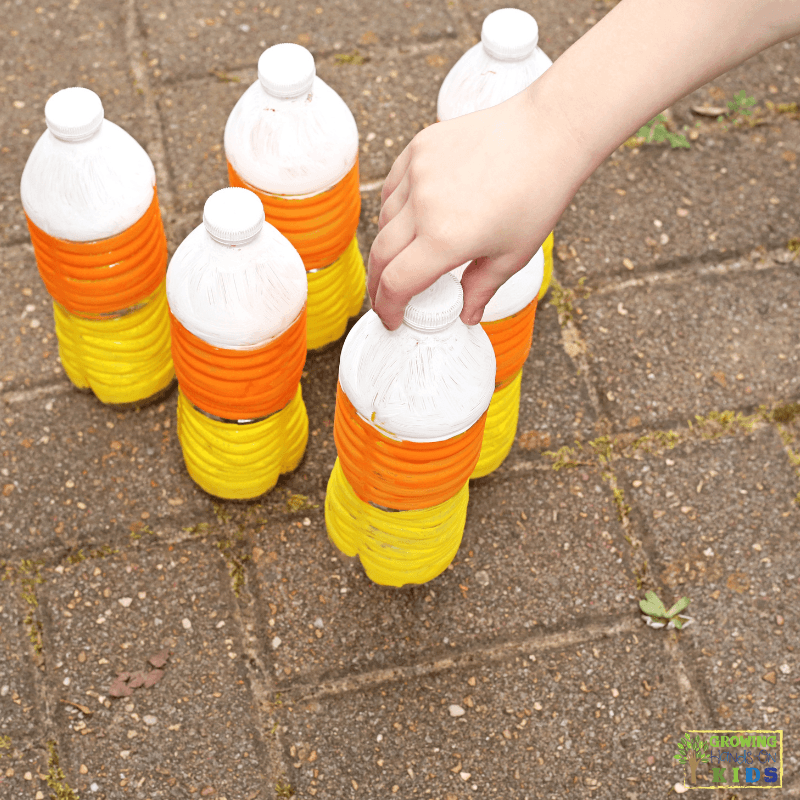
- Set up the pins: Arrange the six painted bottles in a bowling formation on a flat outdoor surface.
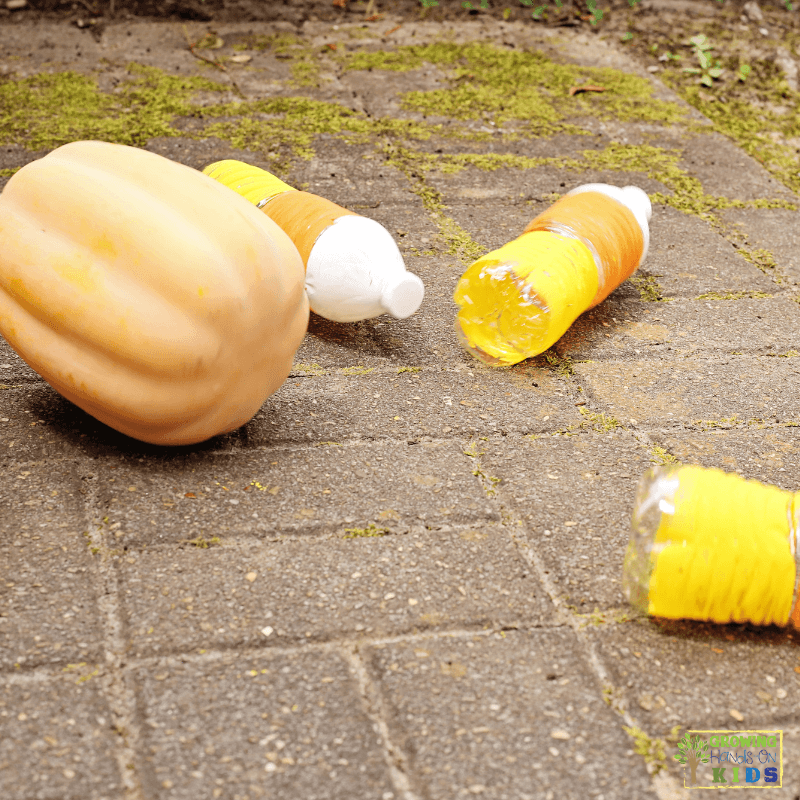
- Start bowling: Have children stand a short distance away and roll the pumpkin toward the bottles.
- Count the pins: Count how many bottles were knocked down. Reset the pins and take another turn!
- Make it a challenge: Encourage children to keep track of their score or move farther away as their bowling skills improve.
Benefits of Pumpkin Bowling for Kids
This simple fall activity is about much more than knocking over bowling pins! Pumpkin bowling gives kids an opportunity to work on several developmental skills through play.
- Gross motor skills: Rolling the pumpkin works the arms, shoulders, and core while encouraging whole-body movement and control.
- Hand-eye coordination: Kids need to look at their target, aim the pumpkin, and coordinate their movements to send it toward the bowling pins.
- Motor planning: Children have to figure out how much force to use, where to position their bodies, and how to adjust their movements from one turn to the next.
- Bilateral coordination: Picking up, carrying, and positioning the pumpkin can encourage children to use both sides of their body together.
- Visual-motor skills: Kids use visual information about the location and distance of the pins to help guide their movements.
- Graded force: A pumpkin doesn’t roll quite like a regular ball! Kids get practice experimenting with how hard or softly they need to push it.
- Counting and math skills: Counting knocked-down bottles is an easy way to practice number concepts. Older children can keep score or practice simple addition and subtraction.
- Turn-taking and social skills: When played with siblings, classmates, or friends, pumpkin bowling provides natural opportunities to practice waiting, taking turns, and cheering for others.
- Following directions: Setting up the pins, waiting behind a starting line, rolling the pumpkin, and resetting the game provide practice following simple multi-step directions.
Using Pumpkin Bowling in Therapy
Pumpkin bowling can be a fun seasonal activity to add to an occupational or physical therapy session. You can easily adjust the activity depending on the skills you are working on with the child.
For gross motor and motor planning, change the child’s starting position. Try rolling while standing, kneeling, half-kneeling, or sitting on the floor. You can also place a simple obstacle or movement activity before the bowling station, such as stepping over cones or walking along a taped line.
For visual-motor skills, place a piece of tape on the ground showing where the child should aim, or number the bowling pins and ask them to target a specific number.
You can also incorporate fine motor skills by having children help paint the bowling pins, place stickers on the bottles, write numbers on them, or use tongs to pick up small fall-themed items between bowling turns.
If you’re working on self-regulation or frustration tolerance, pumpkin bowling provides a playful opportunity to practice handling unexpected outcomes. Because a pumpkin may wobble or roll in a different direction than expected, children can practice trying again and changing their approach.
Using Pumpkin Bowling at Home
Set this activity up on the driveway, sidewalk, patio, or even in the backyard for an easy fall movement break.
Families can keep the game simple for younger children or turn it into a family bowling competition with older kids. Let everyone take several turns and keep a running score.
You could also turn it into a quick after-school movement activity. A few rounds of pumpkin bowling can give kids an opportunity to move their bodies after sitting during the school day.
For an indoor version, use the candy corn bottles with a small artificial pumpkin, soft sensory ball, or playground ball.
Using Pumpkin Bowling in the Classroom
Pumpkin bowling makes a fun addition to a fall classroom party, movement center, indoor recess activity, or gross motor station.
Set up a designated bowling area and use tape to mark where children should stand. Children can take turns bowling while another student counts how many pins fall.
You can also connect pumpkin bowling with classroom learning.
Try:
- Numbering the bowling pins and adding the numbers that fall.
- Putting letters on the pins and naming the letters that are knocked down.
- Adding sight words to the bottles and having children read the words they knock over.
- Having children predict how many pins they think they will knock down before each turn.
- Creating a simple class graph showing how many pins each child knocked over.
- Pairing pumpkin bowling with a fall or pumpkin-themed book.
For younger students, focus more on movement, counting, and turn-taking rather than keeping score.
Easy Ways to Change the Challenge
One of the best things about this activity is how easy it is to adapt for different ages and skill levels.
Make it easier: Move the child closer to the pins, spread the pins farther apart, or substitute a round ball for the pumpkin.
Make it harder: Move the starting line farther away, place the pins closer together, use a smaller pumpkin, or have children aim for a specific pin.
You can even create several starting lines so children can choose the distance that feels challenging but achievable for them.
Whether you use it during a therapy session, set it up as a classroom movement center, or play a few rounds in the driveway at home, pumpkin bowling is a simple way to help kids build important developmental skills through play.
You May Also Like:

Heather Greutman, COTA
Heather Greutman is a Certified Occupational Therapy Assistant with experience in school-based OT services for preschool through high school. She uses her background to share child development tips, tools, and strategies for parents, educators, and therapists. She is the author of many ebooks, including The Basics of Fine Motor Skills, The Basics of Pre-Writing Skills, and co-author of Sensory Processing Explained: A Handbook for Parents and Educators.