Easy Fine Motor Activities for Babies and Toddlers (Ages 0–2)
Affiliate and Referral links are used below to promote products I love and recommend. I receive a commission on any purchases made through these links. Please see my disclosure policy for more details. As an Amazon Associate, I earn from qualifying purchases.
Even from just a few months old, babies are already developing important fine motor skills. From reaching and grasping to holding, releasing, and exploring toys with their hands, these early movements lay the foundation for later skills like feeding, drawing, and writing.
It’s important to include simple, everyday opportunities for your baby to practice fine motor skills throughout their day. The good news is that this doesn’t require anything fancy or complicated. Many fine motor skills develop naturally through play, routines, and hands-on exploration.
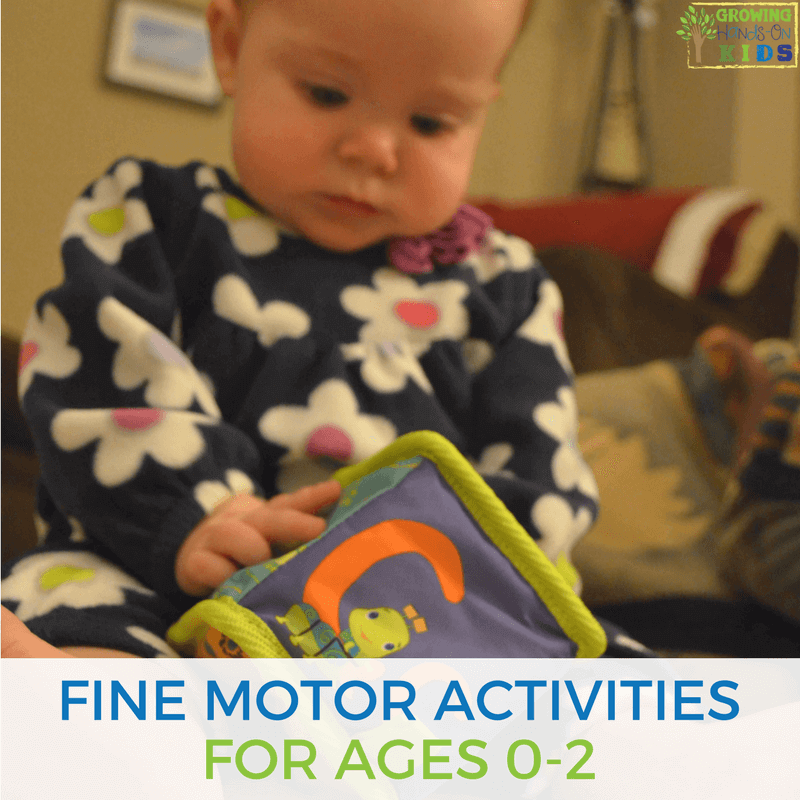
Below, I’m sharing fine motor activity ideas for ages 0–2 that are easy to set up and can be adjusted as your child grows. You can also refer to my typical fine motor developmental milestones for ages 0–6 to better understand what skills tend to emerge at different ages and how to support them along the way.
As always, keep in mind that all children develop at their own pace. The activities and milestones shared here are meant to be general guidelines and ideas for play, not a diagnostic tool. If you ever have concerns about your child’s development, talk with your pediatrician or seek out an evaluation from a licensed occupational therapist.
Fine Motor Activity Ideas for Ages 0-2
Here are some great ways to get started with fine motor activities for your little one:
- Grasping and letting go – rings, blocks, rattles, favorite blanket or stuffed animal.
- Turning objects in their hands – blocks, rings, and other favorite toys. Introducing new and novel toys will also encourage them to explore and turn that object in their hands to figure it out.
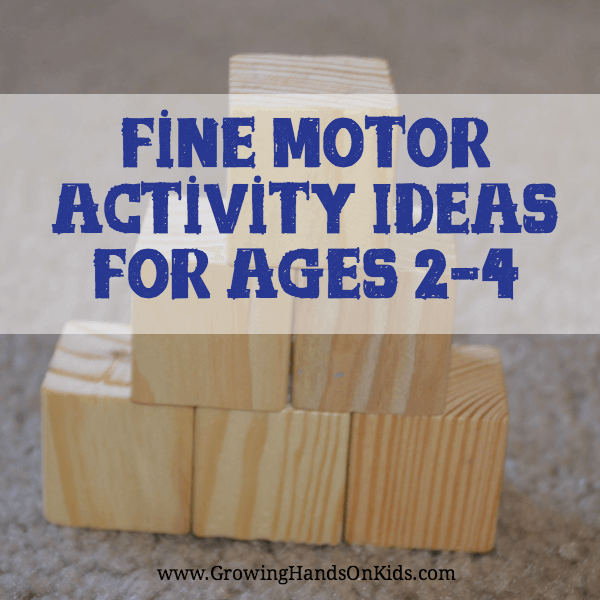
- Stacking blocks – for this age, stacking 2-6 blocks is age-appropriate.
- Drawing with crayons – break crayons in half or use rock crayons for easier grasping.
- Snapping & buttoning – Use large buttons, and this is more appropriate for children closer to age 12-18 months.
- Reaching and swiping at toys – Floor time with toys just out of reach encourages open-hand contact, early grasping, and arm-hand coordination.
- Two-handed holding (bilateral coordination) – Holding a toy with one hand while exploring it with the other (soft balls, rattles, pop beads, or chunky blocks.
- Transferring objects from hand to hand– Passing toys from one hand to the other helps build coordination between both sides of the body.
- Banging and tapping toys together – Stacking cups, blocks, or wooden spoons allows babies to practice grasp strength and controlled release.
- Dropping objects into containers – Placing blocks or balls into a box, basket, or wide-mouth container supports hand-eye coordination and purposeful release.
- Pulling and tugging – Pull-toys, scarves pulled from a box, or gently tugging on socks and blankets strengthen hands and arms.
- Pushing and poking – Pushing balls, chunky pegs, or toys with buttons helps develop finger isolation and pressure control.
- Squeezing soft toys – Foam balls, bath toys, or soft blocks build early hand strength through whole-hand squeezing.
- Turning pages of board books – Even early page-turning (with help) supports finger movement, grasp control, and visual-motor skills.
- Finger feeding – Picking up small, safe foods (like soft fruit pieces or cereal melts) strengthens the pincer grasp and promotes independence.
- Simple shape sorters – Large, chunky shapes help toddlers practice grasping, turning, and releasing with purpose.
- Pretend play with everyday objects – Scooping with a spoon, stirring, or placing items in and out of containers builds functional hand skills.
Some great times to work on fine motor skills are when your child is in their highchair or during bath time.
In the bath, let them fill and empty various containers and spill water. This will encourage them to use their hands to explore things around them. You can use recycled yoghurt containers or any small container that you have lying around your house.
Music is a great way to introduce new toys that rattle and noisemakers that they can play with to the music.
Blowing bubbles and letting an older baby catch or pop them will also encourage them to use both their hands.
For smaller infants who aren't ready for these types of activities, tummy time is a great way to encourage using their hands. Stacking blocks, pushing blocks through holes, using rattles and noisy toys, and encouraging them to pick up and hold things in their hands.
Of course, reading is always a great activity to include. You can find a variety of board books or books with tabs that babies can practice turning or grabbing. We also enjoyed these My First Touch and Feel Picture Cards at this age.
For more ideas, I've written a very detailed book about the development of fine motor skills, with lots of age-appropriate activity ideas. Check out my Basics of Fine Motor Skills digital download.
More Activity Ideas You Might Like:

Heather Greutman, COTA
Heather Greutman is a Certified Occupational Therapy Assistant with experience in school-based OT services for preschool through high school. She uses her background to share child development tips, tools, and strategies for parents, educators, and therapists. She is the author of many ebooks, including The Basics of Fine Motor Skills, The Basics of Pre-Writing Skills, and co-author of Sensory Processing Explained: A Handbook for Parents and Educators.
AWESOME ideas