
Turkey Sensory Bottle: A Fun Thanksgiving Sensory Activity for Kids
Affiliate and Referral links are used below to promote products I love and recommend. I receive a commission on any purchases made through these links. Please see my disclosure policy for more details. As an Amazon Associate, I earn from qualifying purchases.
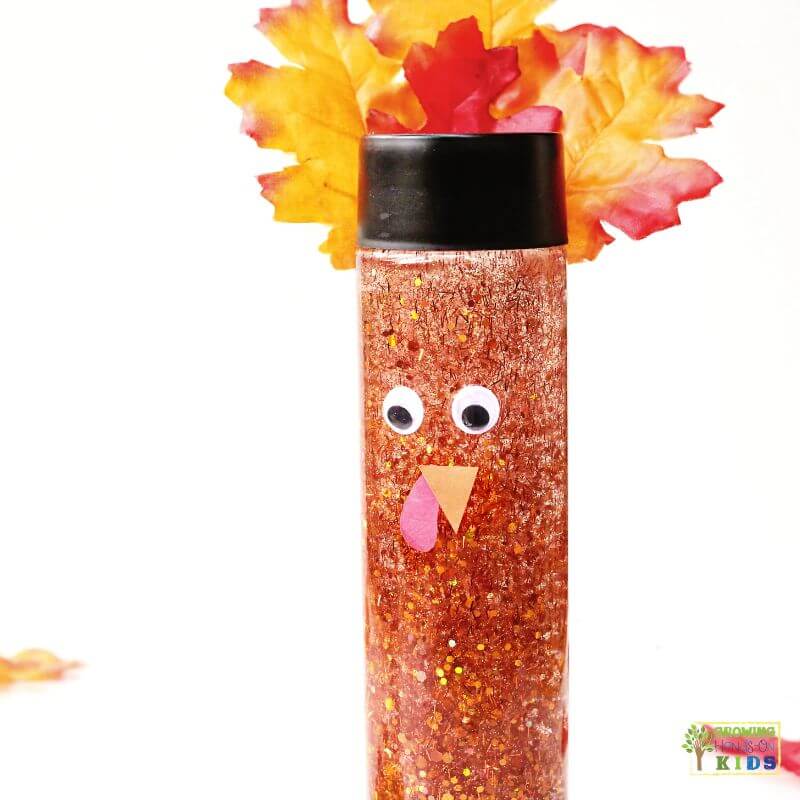
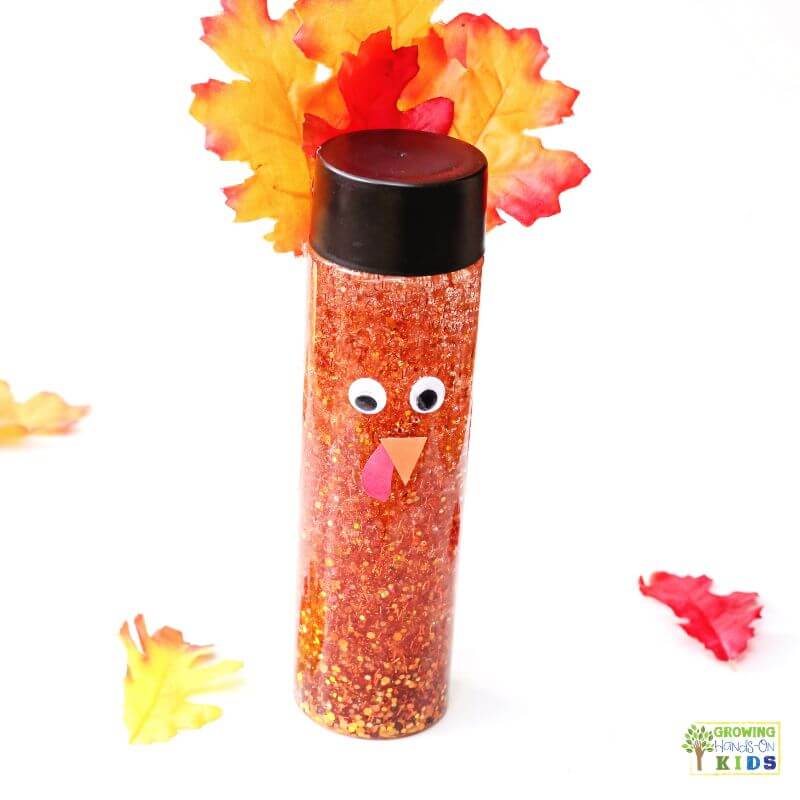
This adorable Turkey Sensory Bottle is a great way to combine a little holiday crafting with hands-on sensory play. With swirling orange glitter, colorful fall leaves, and a cute turkey face, this activity is sure to be a hit with little hands.
Sensory bottles are a wonderful tool for encouraging visual tracking, attention, and self-regulation.
Whether you’re looking for a Thanksgiving activity for your classroom, a calming sensory tool for occupational therapy sessions, or a fun fall craft to make at home, this Turkey Sensory Bottle is an easy activity to try!
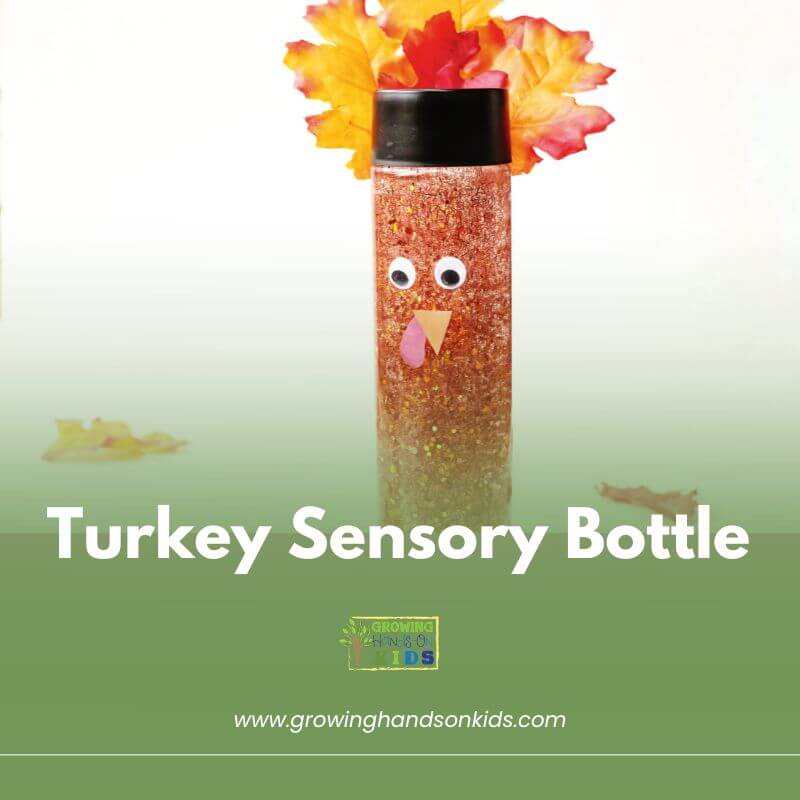
Turkey Sensory Bottle Directions
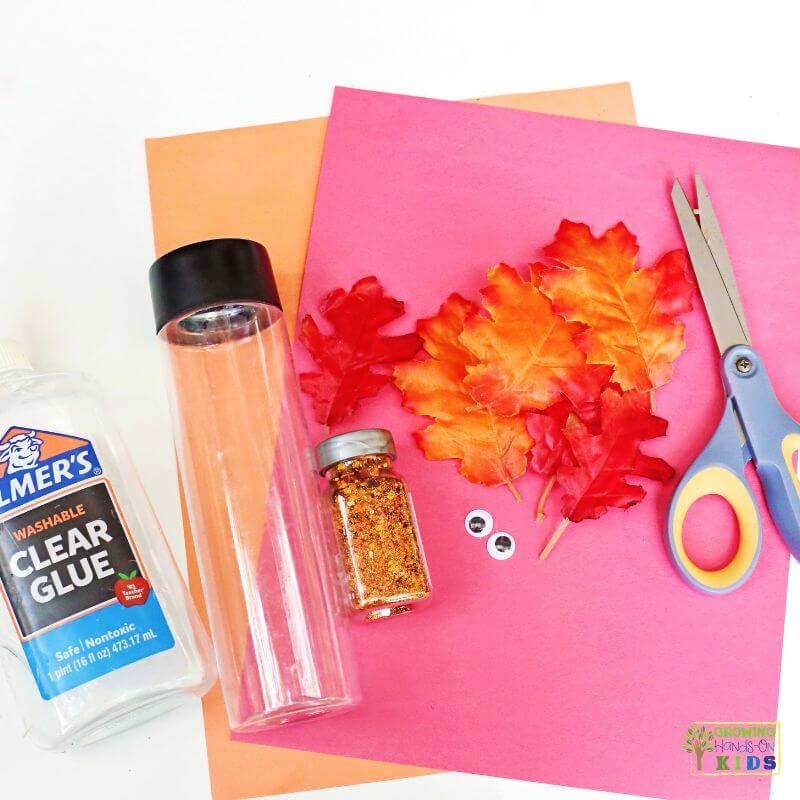
Supplies
- Clear plastic bottle with a secure lid
- Clear glue
- Water
- Orange glitter
- Orange construction paper
- Red construction paper
- Googly eyes
- Faux fall leaves
- Scissors
- Glue
Instructions
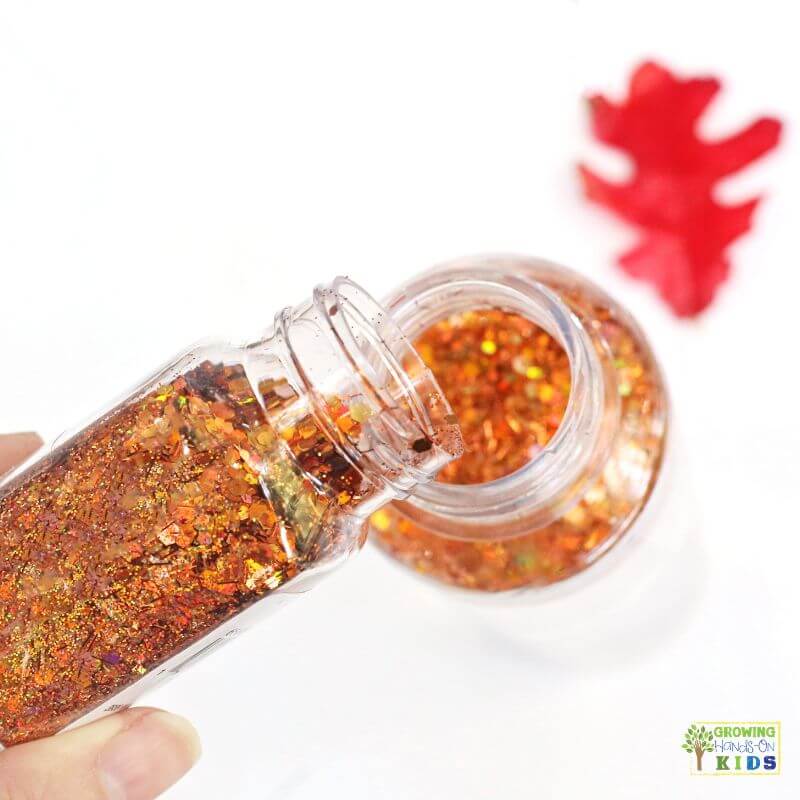
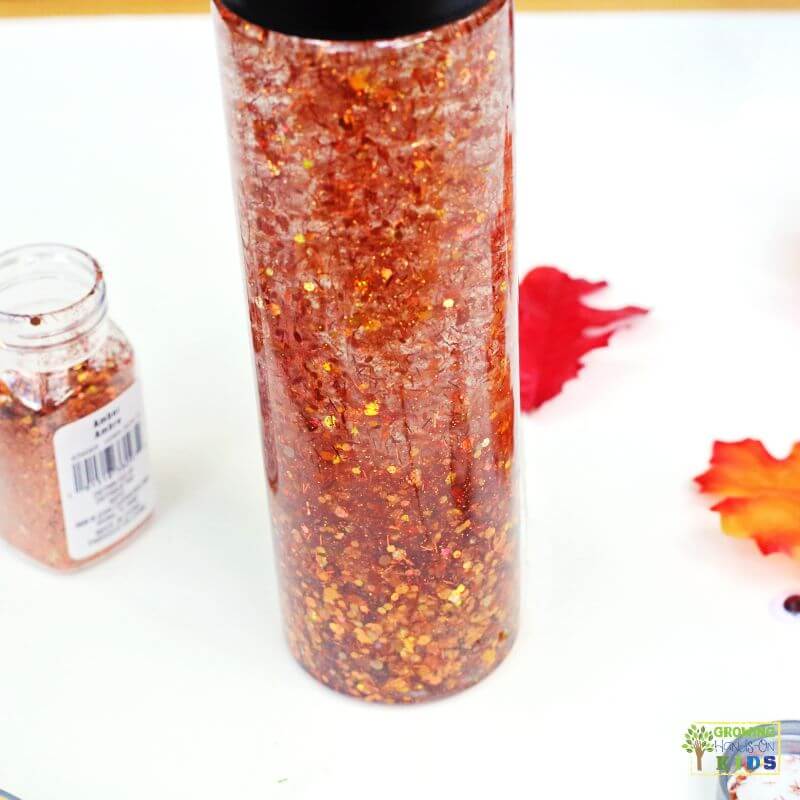
- Prepare the sensory liquid: Fill the bottle about halfway with clear glue. Add water and leave some room at the top for shaking. Add orange glitter and gently shake to combine.
- Seal the bottle: Once you’re happy with the glitter mixture, securely close the bottle. An adult can add glue around the inside of the lid before sealing it to help prevent leaks.
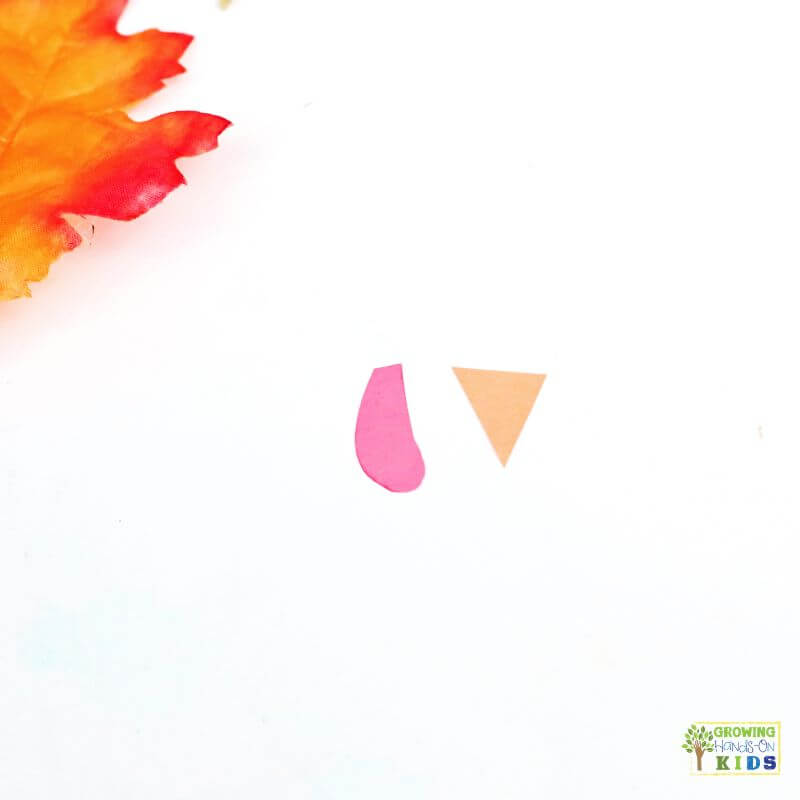
- Make the turkey face: Cut a small triangle from orange construction paper for the turkey’s beak. Cut a small wattle shape from red construction paper.
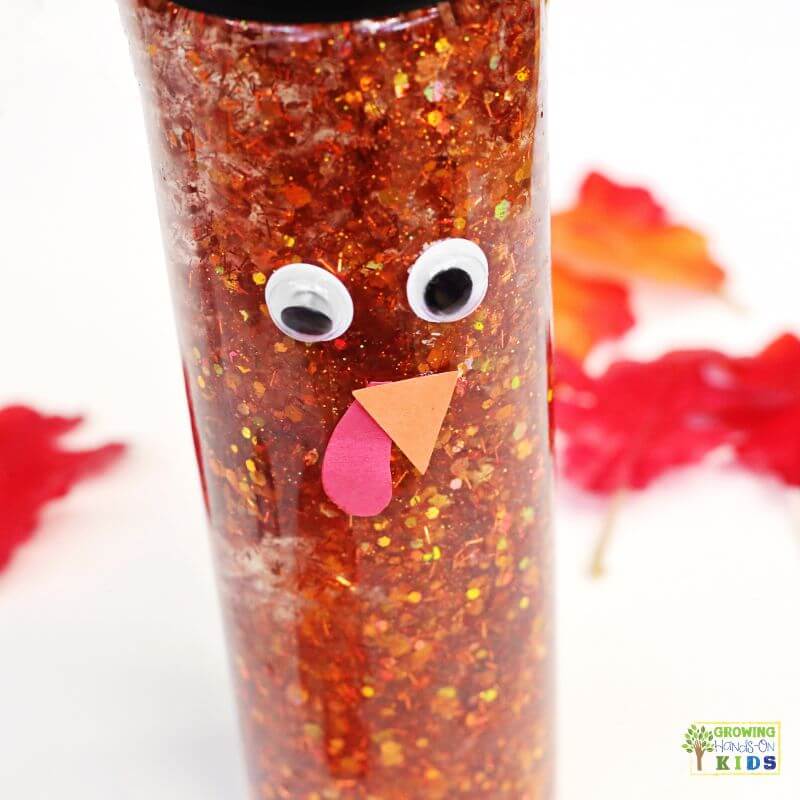
- Add the face: Glue two googly eyes onto the front of the bottle. Glue the paper beak and red wattle underneath the eyes.
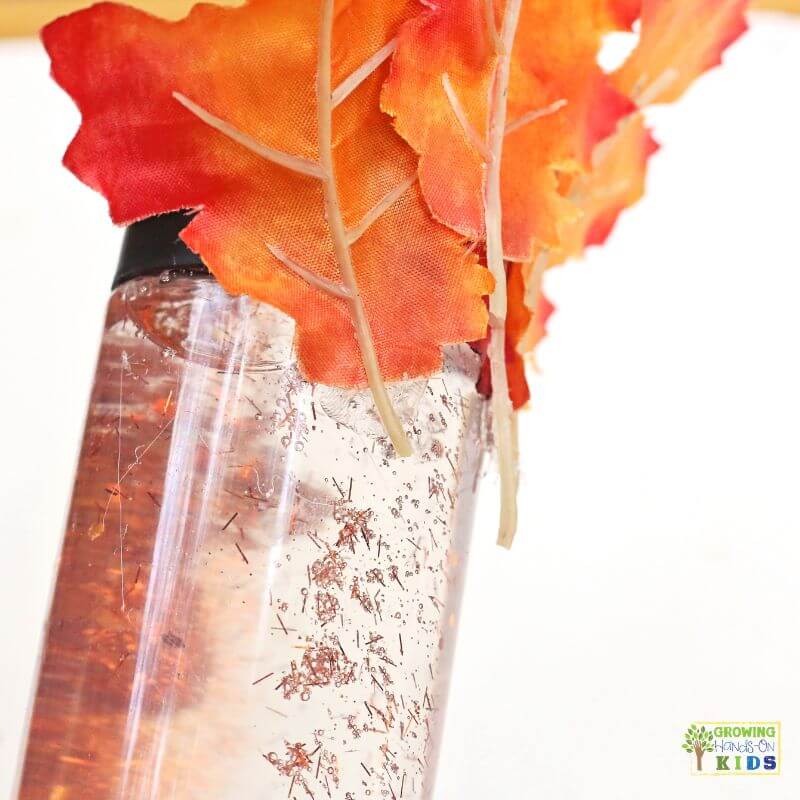
- Add the feathers: Arrange faux fall leaves around the back of the bottle, overlapping them slightly to create a colorful turkey tail. Glue the leaves in place.
- Let it dry: Allow all of the decorations to dry completely before letting children play with the sensory bottle.
Tip: Adjust the amount of glue and water to change how quickly the glitter moves. More glue generally creates a slower-moving glitter effect. Be sure to securely seal the lid and supervise young children during use.
Ways to Use Your Turkey Sensory Bottle
One of the best things about this Thanksgiving sensory activity is how easily it can be incorporated into different settings. Here are a few fun ways to use your finished turkey sensory bottle at home, in the classroom, or during occupational therapy sessions.
In the Classroom
1. Add it to a calm-down corner. Place the turkey sensory bottle in your classroom’s calm-down area. Children can gently shake the bottle and watch the glitter settle while practicing calming strategies or taking a short sensory break.
2. Use it for Thanksgiving-themed circle time. Pass the bottle around during a Thanksgiving discussion. Have children take turns sharing something they are thankful for while holding the turkey bottle.
3. Practice waiting and turn-taking. Use the bottle during small group activities. Children can practice passing the bottle, waiting for their turn, and sharing materials with classmates.
4. Create a visual attention activity. Encourage children to watch the glitter until it settles at the bottom. Ask them to describe what they notice about how the glitter moves.
At Home
1. Create a Thanksgiving calm-down tool. Keep the sensory bottle in a quiet space where your child can use it when they need a break. Encourage them to watch the glitter settle while taking a few slow breaths.
2. Make it a family craft. Have children help cut out the turkey decorations, choose the leaves, and glue everything together. This is a great opportunity to work on fine motor skills while spending time together.
3. Play a Thanksgiving observation game. Ask your child questions while they explore the bottle. Does the glitter move faster when they shake it or when they slowly turn it? What happens when they hold the bottle upside down?
4. Use it during transitions. Try offering the sensory bottle before transitioning from playtime to another activity. Watching the glitter settle can provide a predictable, quiet moment before moving on to the next task.
In Occupational Therapy Sessions
1. Work on visual tracking skills. Have the child hold the bottle at eye level and slowly move it from side to side while following the glitter with their eyes. You can also place the bottle on a table and gently tilt it in different directions.
2. Encourage bilateral coordination. Have the child use both hands to hold and shake the bottle. Practice switching hands, turning the bottle upside down, or slowly rotating it while maintaining control.
3. Practice graded motor control. Challenge children to shake the bottle gently, then a little faster, and compare how the glitter moves. This provides an opportunity to practice controlling the amount of force used during an activity.
4. Incorporate self-regulation strategies. Pair the sensory bottle with deep breathing, counting, or other regulation techniques. Encourage children to notice how their bodies feel before and after watching the glitter settle. Remember that sensory tools are individualized, and not every child will find the same visual input calming.
5. Build fine motor skills during assembly. Have children cut out the paper decorations, pick up and position the googly eyes, and arrange the faux leaves. You can grade the activity by providing pre-cut pieces for younger children or encouraging older children to cut and assemble the turkey more independently.
6. Practice following directions and sequencing. Give children two- or three-step directions for decorating their turkey bottle. For example, “First glue on the eyes, next add the beak, and then choose three leaves for the feathers.”
Whether you’re using it during occupational therapy, adding it to a classroom calm-down corner, or making it as a fun craft at home, this little turkey offers plenty of opportunities for learning through play.
Turkey Sensory Bottle
Materials
- Clear plastic bottle with a secure lid
- Clear glue
- Water
- Orange glitter
- Orange construction paper
- Red construction paper
- Googly eyes
- Faux fall leaves
- Scissors
- Glue
Instructions
Prepare the sensory liquid:
- Fill the bottle about halfway with clear glue.
- Add water and leave some room at the top for shaking.
- Add orange glitter and gently shake to combine.
Seal the bottle:
- Once you’re happy with the glitter mixture, securely close the bottle.
- An adult can add glue around the inside of the lid before sealing it to help prevent leaks.
Make the turkey face:
- Cut a small triangle from orange construction paper for the turkey’s beak.
- Cut a small wattle shape from red construction paper.
Add the face:
- Glue two googly eyes onto the front of the bottle.
- Glue the paper beak and red wattle underneath the eyes.
Add the feathers:
- Arrange faux fall leaves around the back of the bottle, overlapping them slightly to create a colorful turkey tail.
- Glue the leaves in place.
Let it dry:
- Allow all of the decorations to dry completely before letting children play with the sensory bottle.
Shake and explore:
- Encourage children to shake, roll, and turn the bottle while watching the glitter swirl around inside.
You May Also Like:


Heather Greutman, COTA
Heather Greutman is a Certified Occupational Therapy Assistant with experience in school-based OT services for preschool through high school. She uses her background to share child development tips, tools, and strategies for parents, educators, and therapists. She is the author of many ebooks, including The Basics of Fine Motor Skills, The Basics of Pre-Writing Skills, and co-author of Sensory Processing Explained: A Handbook for Parents and Educators.