Skills Needed for Handwriting Readiness (And How to Build Them Through Play)
Affiliate and Referral links are used below to promote products I love and recommend. I receive a commission on any purchases made through these links. Please see my disclosure policy for more details. As an Amazon Associate, I earn from qualifying purchases.
When parents ask me about handwriting, they usually want to know: “How do I help my child hold a pencil correctly?”
But here’s the thing… Handwriting readiness starts long before a child ever picks up a pencil.
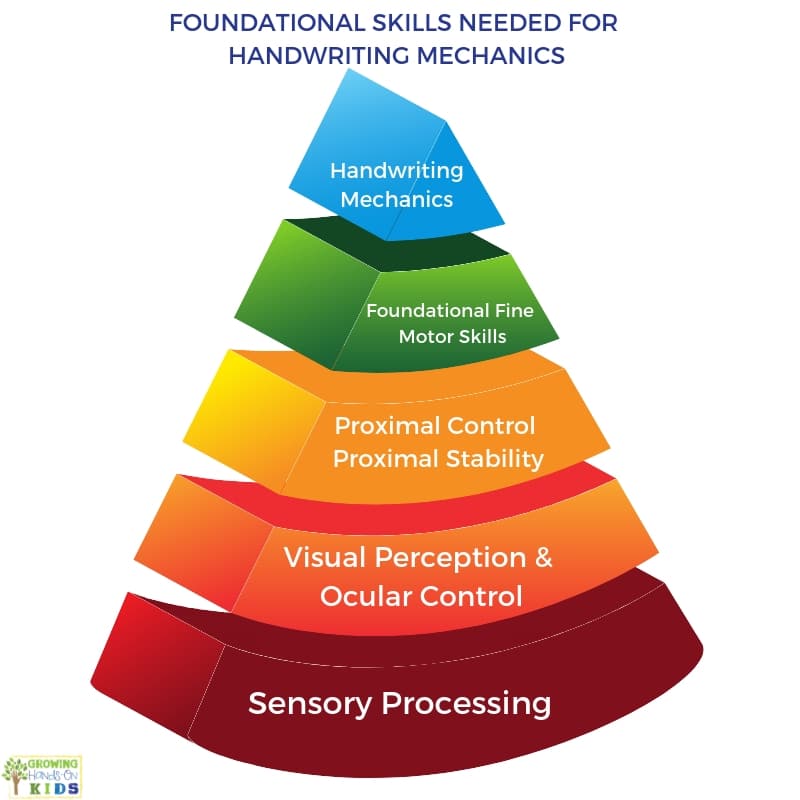
Before children can write letters and numbers with control and endurance, they need a strong foundation of sensory, gross motor, visual, and fine motor skills working together.
Let’s break down the key skills needed for handwriting readiness and simple ways you can support each one through play.
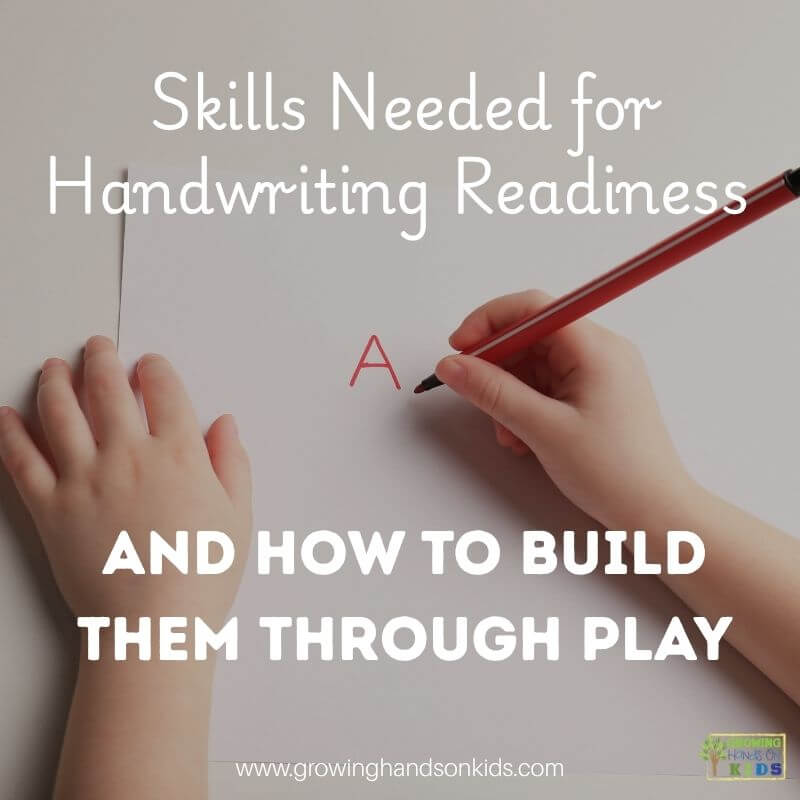
Handwriting Readiness Is More Than Pencil Grasp
If a child struggles with handwriting, the issue often isn’t “just” pencil grasp.
It may be:
- Weak hand strength
- Poor shoulder stability
- Visual-motor challenges
- Underdeveloped visual perception
- Limited motor planning
Handwriting is a full-body, whole-brain task. The good news is that all of these skills can be strengthened through play, movement, everyday participation, and hands-on learning.
You don’t need worksheets to build handwriting readiness. You need opportunities for children to move, build, squeeze, climb, create, and explore.
Skills Needed for Handwriting Readiness
Every child develops at their own pace. If you have concerns about your child’s handwriting readiness or fine motor development, consider consulting with an Occupational Therapist for individualized guidance.
Core Strength and Postural Control
Before a child can control their fingers, they need stability in their core, shoulders, and upper body.
A strong core helps children:
- Sit upright at a desk
- Stabilize their body while their hands move
- Write without leaning, slouching, or fatiguing quickly
Activities to Build Core Strength
- Animal walks (bear crawl, crab walk)
- Climbing playground equipment
- Wheelbarrow walking
- Yoga poses for kids
- Obstacle courses
Shoulder Stability
Shoulder strength provides the stable base needed for controlled hand movements. If the shoulder isn’t stable, fine motor control becomes much harder.
Activities to Build Shoulder Stability
- Drawing or writing on a vertical surface (easel, chalkboard)
- Pushing heavy objects
- Crawling activities
- Playing on hands and knees
Hand Strength (Grip & Pinch Strength)
Hand strength develops gradually as children participate in everyday life.
When hand strength is limited, you may notice:
- Difficulty holding a pencil
- Fatigue during writing
- Trouble with scissors
- Difficulty with buttons or zippers
Grip Strength Activities
- Rolling and squeezing play-dough
- Squeezing spray bottles
- Using glue bottles
- Popping bubble wrap
- Climbing
Pinch Strength Activities
- Picking up small objects
- Stringing beads
- Peeling stickers
- Using tongs or tweezers
- Lacing cards
Strong hands allow children to maintain a consistent pencil grasp, control pressure, and write with endurance.
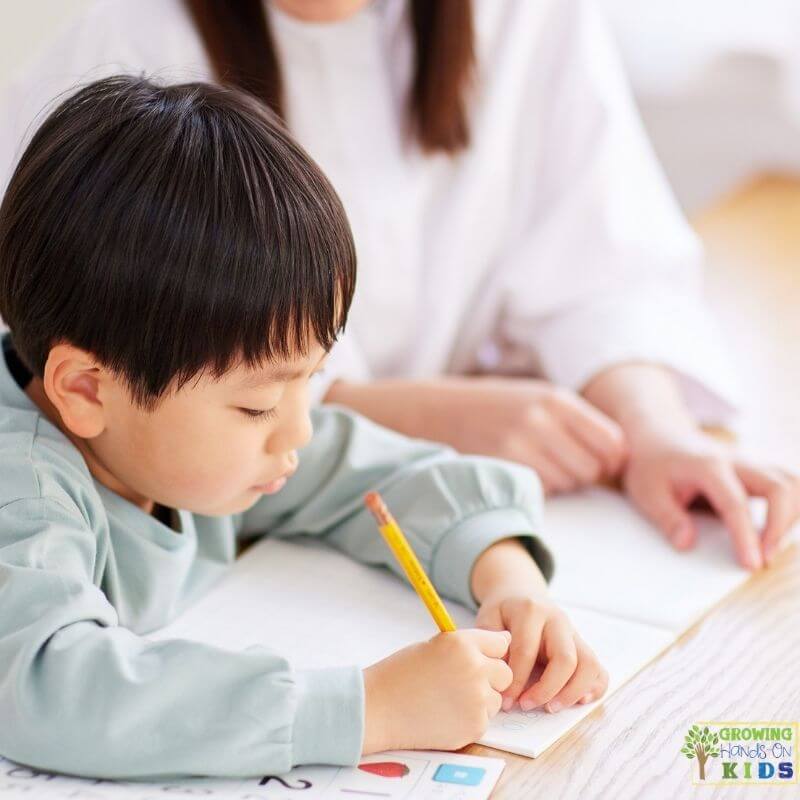
Pincer Grasp Development
The pincer grasp (thumb + index finger) begins developing around 8–10 months and becomes refined by 10–12 months. This small but powerful movement is a major building block for pencil grasp.
Before a child can hold a pencil efficiently, they need:
- Finger strength
- Finger isolation
- Precision
- Coordination
Promote Pincer Grasp Through Play
Fine motor play is the best way to improve pencil grasp concerns.
- Picking up cereal or small blocks
- Completing puzzles
- Playing board or card games
- Stacking rings
- Pom-pom transfers
In-Hand Manipulation
In-hand manipulation is the ability to move objects around in one hand without setting them down.
This skill is essential for:
- Adjusting pencil position
- Flipping a pencil to erase
- Managing small classroom tools
Activities That Help In-Hand Manipulation
- Picking up multiple coins one at a time
- Rotating a pencil between fingers
- Moving small objects from the palm to the fingertips
Visual-Motor Integration
Visual-motor integration is how the eyes and hands work together.
It allows children to:
- Copy shapes and letters
- Stay on lines
- Align numbers in math
- Control spacing
If visual-motor skills are weak, writing may look messy, uneven, or misaligned, even if the child understands the content.
Activities for Visual-Motor Integration
- Tracing lines and shapes
- Copying block designs
- Mazes
- Cutting along lines
- Dot-to-dot pictures
Visual Perceptual Skills
Visual perception is how the brain interprets what the eyes see. It includes seven important areas:
- Visual discrimination
- Visual memory
- Visual spatial relationships
- Visual form constancy
- Visual sequential memory
- Figure-ground perception
- Visual closure
These skills impact reading, math alignment, copying from the board, and overall organization.
Simple Ways to Build Visual Perception
- Memory games
- Puzzles
- Hidden picture activities
- Pattern copying
- “I Spy” games
- Building with blocks
For more resources for this, check out my post on visual perception activities
Bilateral Coordination
Bilateral coordination means both sides of the body working together. In handwriting, one hand stabilizes the paper while the other writes.
Practice With Bilateral Coordination
- Cutting activities
- Rolling dough with both hands
- Climbing
- Lacing cards
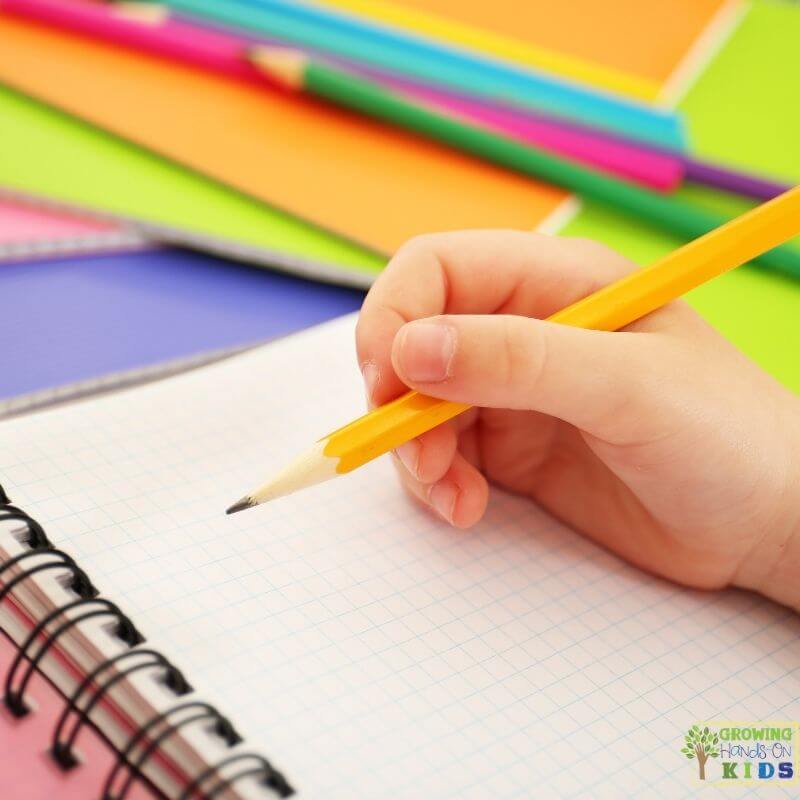
Motor Planning
Motor planning helps children figure out how to complete new or multi-step tasks.
It supports:
- Learning letter formation
- Adjusting movements
- Completing writing tasks smoothly
Obstacle courses, new craft activities, and step-by-step building projects are great for strengthening this skill.
In-Hand Manipulation Skills
This fine motor skill allows a child to hold an object in their hand and move it around within their hand without setting it down.
This skill is especially important for handwriting because it allows children to:
- Adjust their pencil within their hand
- Reposition fingers
- Flip a pencil to erase
- Make small corrections while writing
It also supports everyday life and community skills like:
- Using a vending machine
- Handling coins or exchanging money
- Using credit cards
- Managing small objects independently
The 3 Types of In-Hand Manipulation
Translation
Moving objects from the fingers to the palm and from the palm to the fingers.
Shift
Moving objects in a linear direction within the hand (like fanning out cards or repositioning a pencil).
Rotation
- Simple rotation: turning an object within the fingers
- Complex rotation: turning an object end-to-end (like flipping a pencil to erase)
Activities to Improve In-Hand Manipulation
- Picking up and flipping coins
- Spinning tops
- Stringing beads or paper clips
- Cotton swab painting
- Hole punch art
- Playing a game of Jacks
- Playing card games
These playful activities build precision, finger control, and endurance needed for efficient handwriting.
Eye-Hand Coordination
Eye-hand coordination is the coordinated control of the eyes and hands that guides reaching, grasping, building, catching, and writing.
This skill uses:
- The visual system (what we see)
- The proprioceptive system (body awareness in the hands and arms — and even legs for larger movements)
Together, these systems help coordinate movement with accuracy.
Eye-hand coordination is essential for:
- Handwriting
- Drawing
- Staying within the lines while coloring
- Participating in sports
- Catching or kicking a ball
- Grasping and moving objects accurately
Difficulty with Eye-Hand Coordination May Look Like:
- Messy drawing or writing
- Trouble copying shapes or letters
- Difficulty staying within boundaries when coloring
- Missing a ball when catching or kicking
Activities to Promote Eye-Hand Coordination
- Batting at a balloon
- Kicking or catching a ball
- Playing tennis
- Playing and building with blocks
- Connect-the-dots activities
- Stringing beads
- Playing Simon Says
- Completing puzzles
- Relay races
Sensory Processing & Proprioception
Handwriting is not just about muscles; it’s also about sensory processing. One of the most important sensory systems for handwriting is the proprioceptive system.
Proprioception gives us information about:
- Where our body is in space
- How much force to use
- How much pressure to apply
For handwriting, proprioception helps children:
- Hold the pencil with appropriate pressure
- Avoid pressing too hard or too lightly
- Maintain posture while writing
- Move the pencil smoothly across the page
When proprioceptive processing is underdeveloped, you may notice:
- Very dark or very light writing
- Broken pencil tips
- Hand fatigue
- Slouching or leaning on the desk
- Frequent repositioning of the pencil
Activities That Strengthen Proprioceptive Input for Writing
- Animal walks
- Wall push-ups
- Climbing playground equipment
- Carrying heavy objects
- Squeezing therapy putty
- Writing on vertical surfaces
Heavy work and weight-bearing activities give the muscles and joints the feedback they need to support better handwriting control.
To get even more tips on handwriting, check out The Handwriting Book, written by 10 pediatric Occupational Therapy Practitioners (myself included!) and Physical Therapists. Get strategies for size, spacing, sensory, motor, and visual challenges, plus a ready-to-use handwriting exercise program.
You May Also Like:

Heather Greutman, COTA
Heather Greutman is a Certified Occupational Therapy Assistant with experience in school-based OT services for preschool through high school. She uses her background to share child development tips, tools, and strategies for parents, educators, and therapists. She is the author of many ebooks, including The Basics of Fine Motor Skills, The Basics of Pre-Writing Skills, and co-author of Sensory Processing Explained: A Handbook for Parents and Educators.