
Building Brick Marble Maze Activity to Strengthen Hand Skills
Affiliate and Referral links are used below to promote products I love and recommend. I receive a commission on any purchases made through these links. Please see my disclosure policy for more details. As an Amazon Associate, I earn from qualifying purchases.
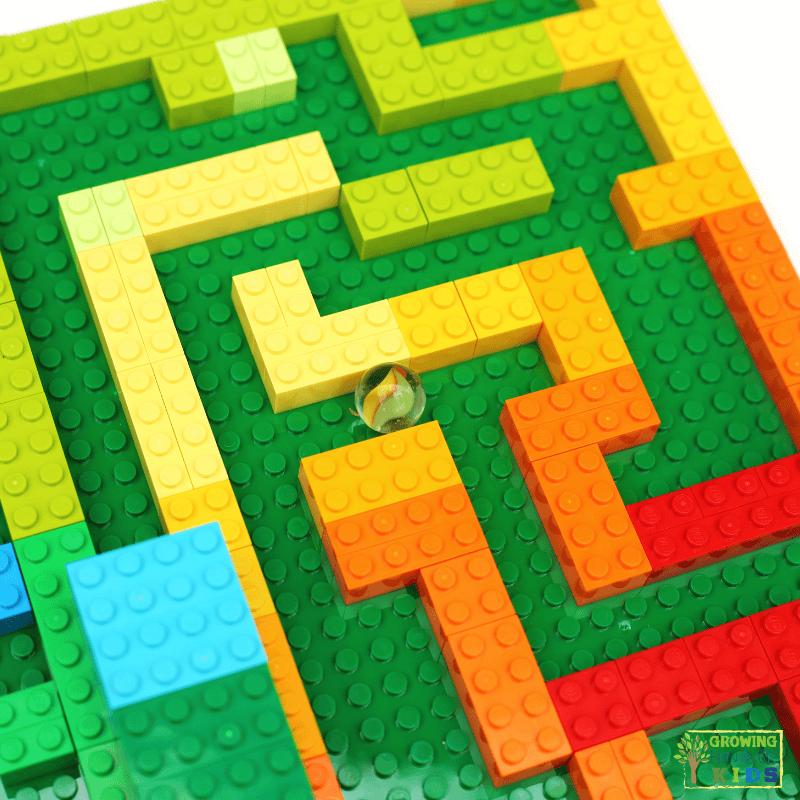
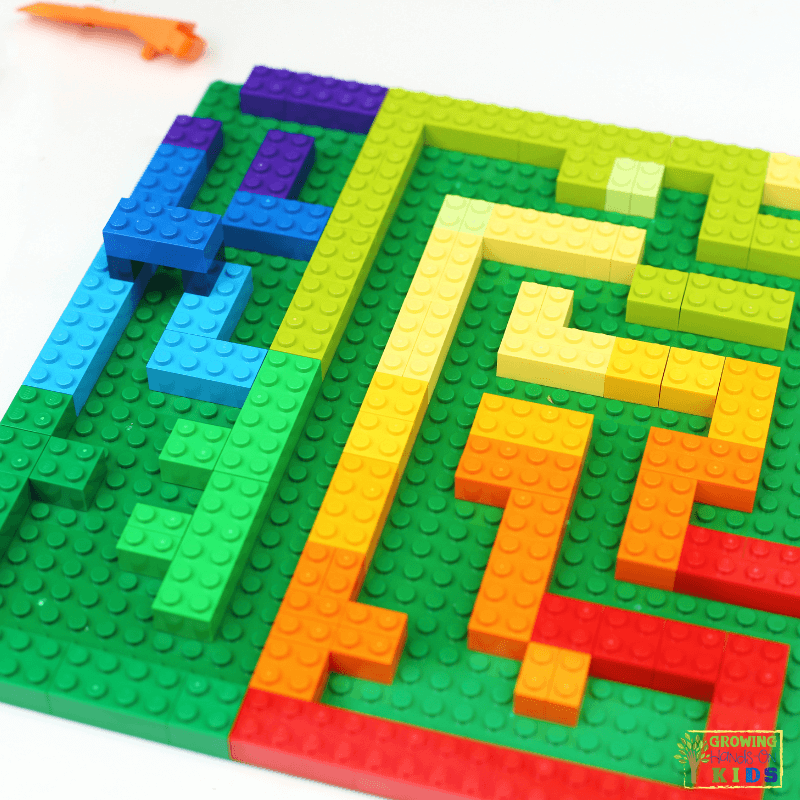
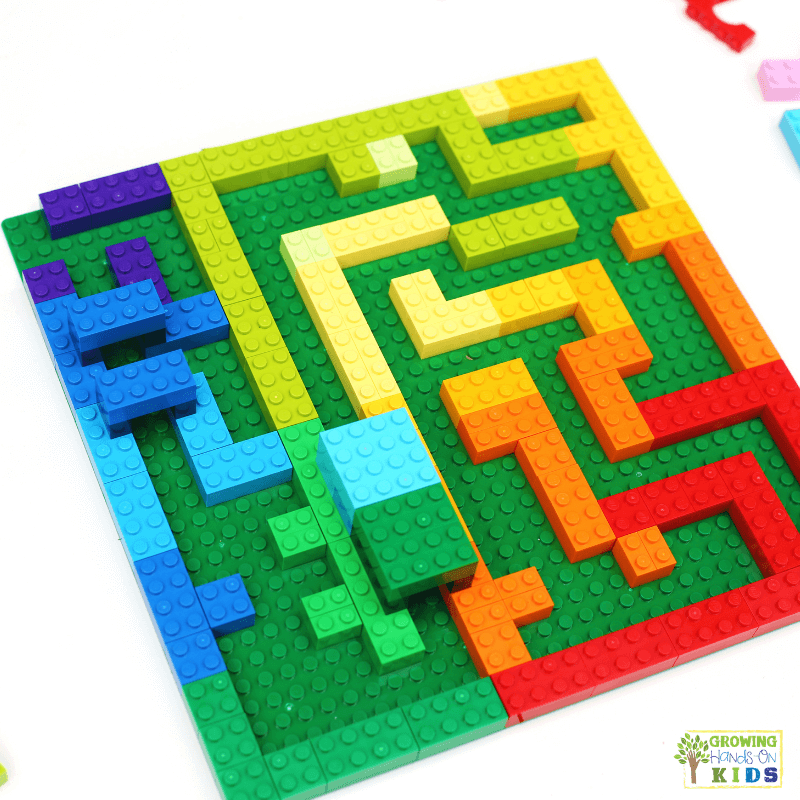
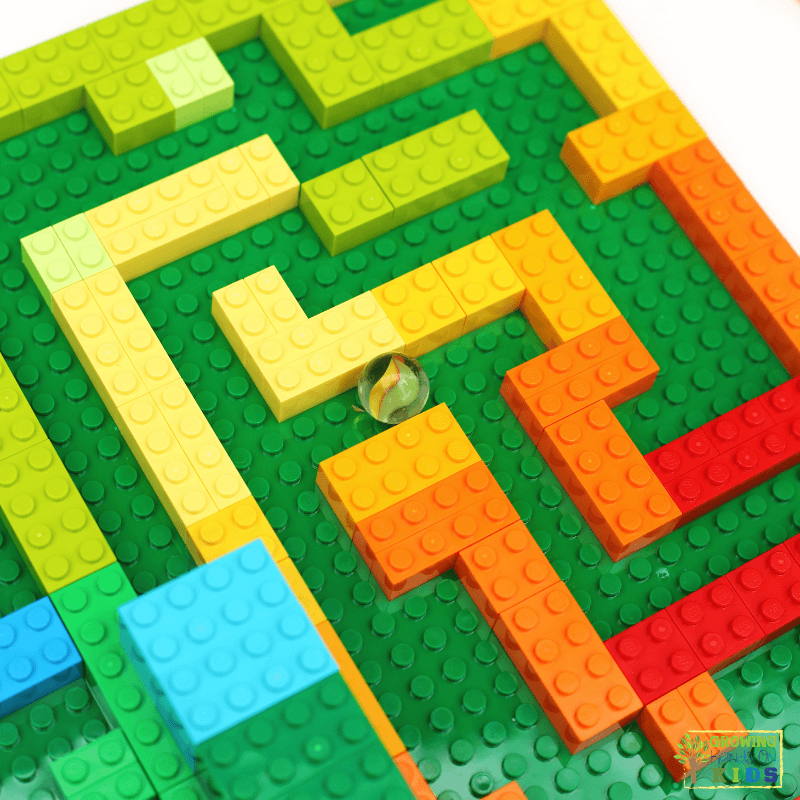
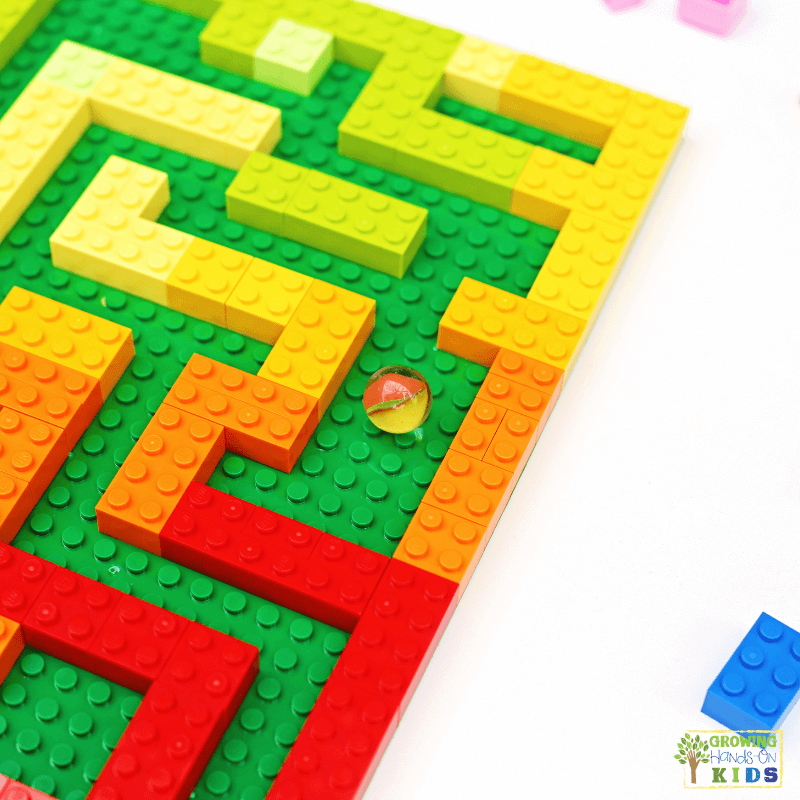
A Building Brick Marble Maze is one of those open-ended activities that grows with your child. It provides them with a hands-on engineering challenge that works on fine motor skills, problem-solving, visual-motor integration, and so much more. Younger children can build simple straight pathways, while older kids can design complex mazes with tunnels, obstacles, and tricky turns. And the best part? They are learning through play without even realizing it.
This is a simple, low-prep activity that supports development across multiple skill areas, perfect for home, classroom, or therapy sessions.
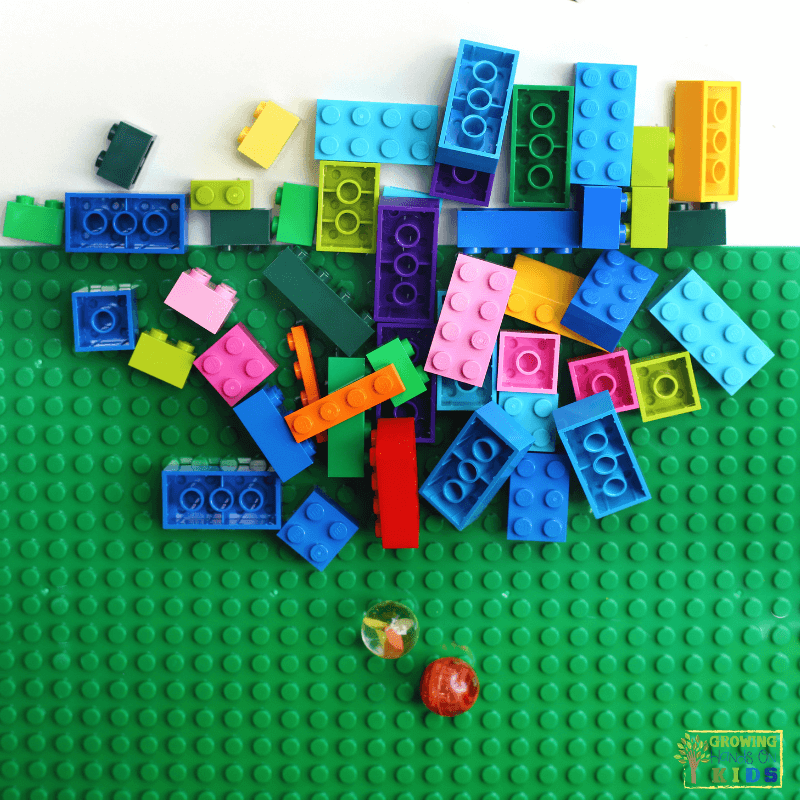
Building Brick Marble Maze Supplies
- Building brick baseplate
- Assorted building bricks
- Marble (or small ball)
Step-by-Step Instructions
- Set Up the Base
Place the LEGO baseplate on a flat surface. This will be the foundation for the maze. - Plan the Maze Path
Decide where the marble will start and where it should finish. A corner-to-corner path works well for beginners. - Build the Walls
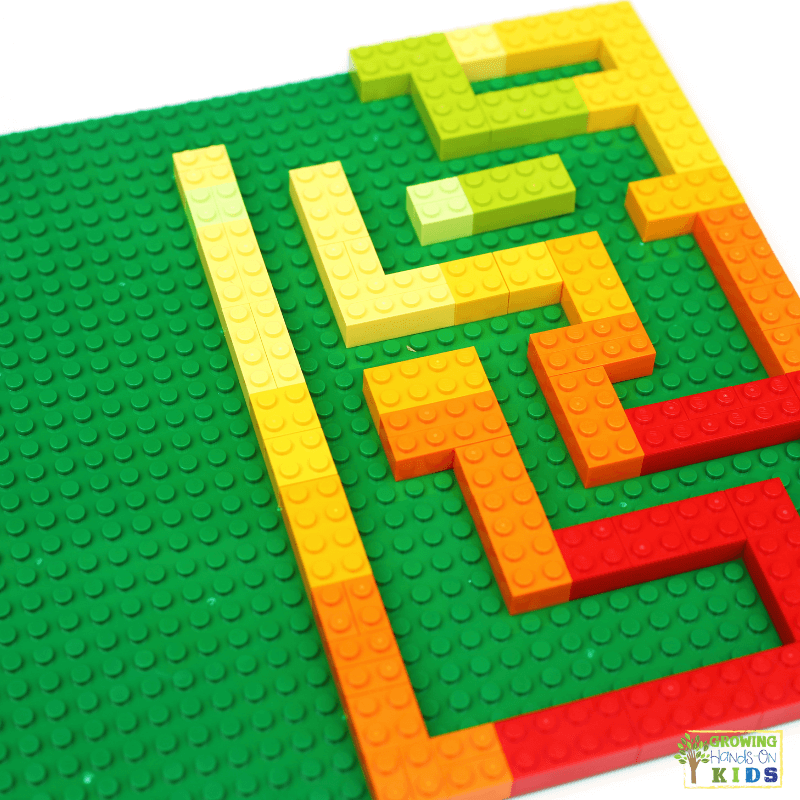
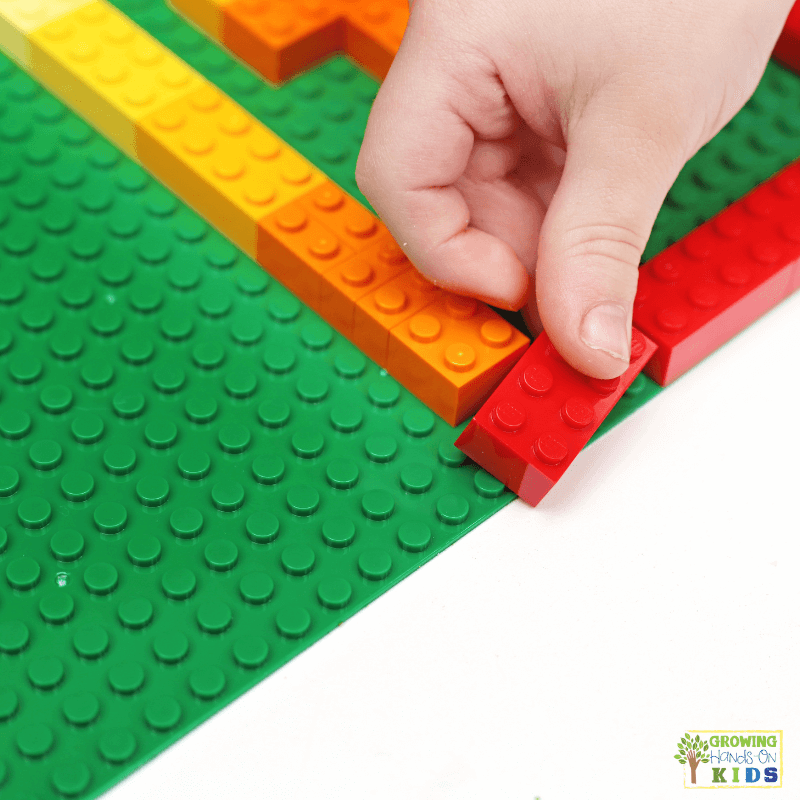
Use LEGO bricks to build walls along the baseplate, leaving space between them for the marble to roll through. - Create Turns and Pathways
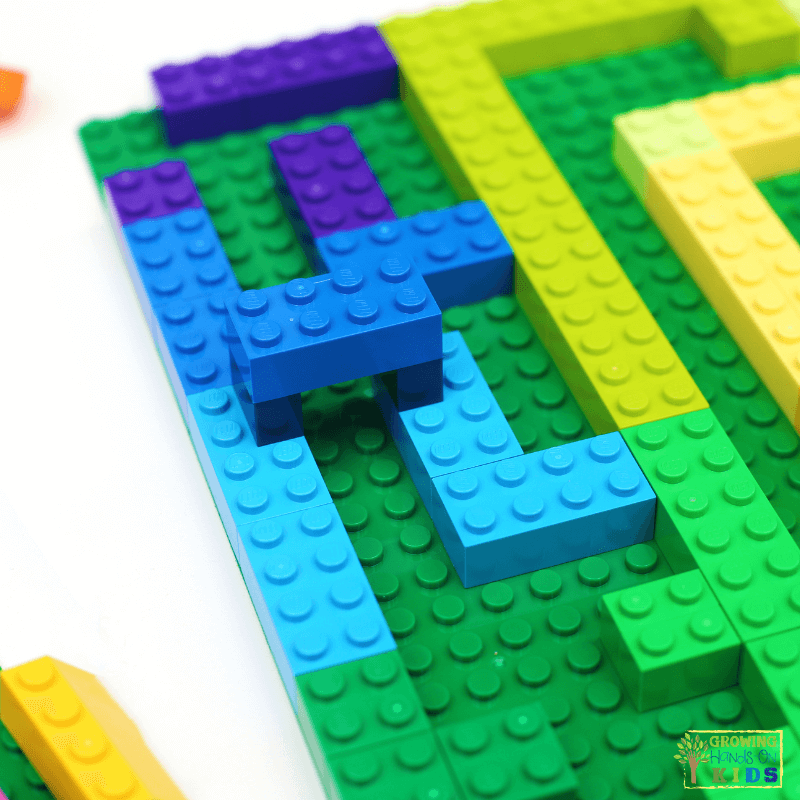
Add turns, corners, and zigzags to make the maze more interesting. Keep checking that the marble can fit and move easily. - Add Tunnels and Obstacles
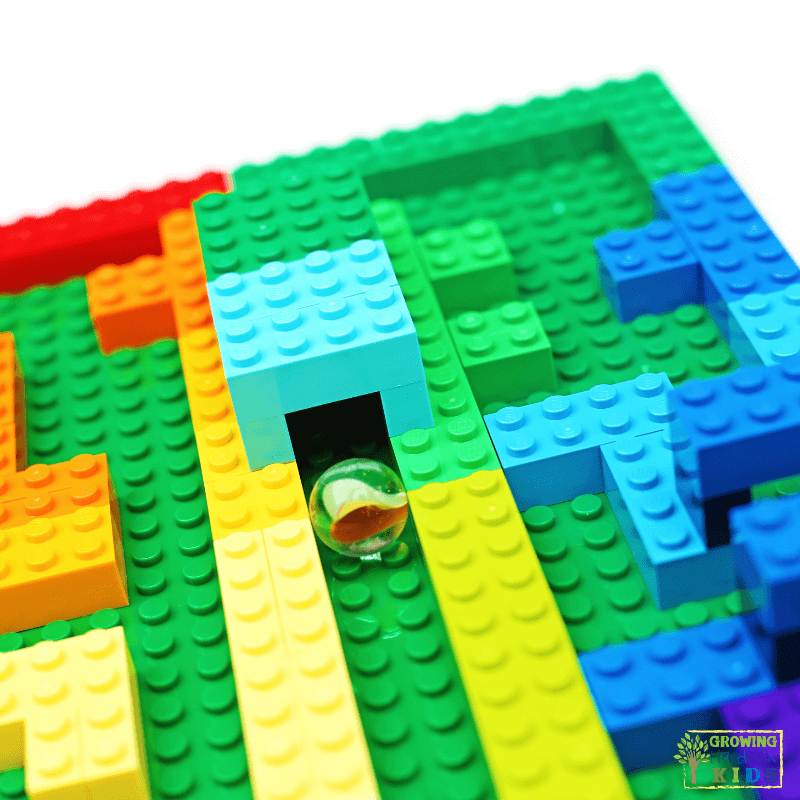
Stack bricks to create tunnels or raised sections. Obstacles like narrow passages or dead ends add an extra challenge. - Test the Maze
Place the marble at the starting point and gently tilt the baseplate to see how it moves through the maze. - Adjust and Rebuild
If the marble gets stuck or escapes the walls, adjust the bricks and test again.
Benefits of a Building Brick Marble Maze
1. Fine Motor Strength & Precision
Snapping bricks onto a baseplate requires hand strength and finger coordination. Children use their:
- Pinch strength
- Bilateral coordination (one hand stabilizes while the other pushes)
- In-hand manipulation
Building small walls and narrow pathways encourages precision and controlled movements, which are important for handwriting and self-care skills.
2. Visual-Motor Integration
Children must visually plan where the bricks go and then coordinate their hands to place them accurately.
- Judge spacing for the marble to fit
- Adjust the alignment of bricks
- Monitor direction and positioning
This skill is foundational for copying from the board, spacing letters, and navigating worksheets.
3. Visual Spatial Awareness
When children design turns, corners, and pathways, they are working on:
- Directionality (left/right, up/down)
- Positioning (above, below, between)
- Spatial relationships
Understanding how space works on a small scale supports math, reading, and everyday problem-solving.
4. Executive Function Skills
This activity naturally builds:
- Planning (“Where will my marble start?”)
- Organization (creating a path that makes sense)
- Flexible thinking (adjusting when it doesn’t work)
- Persistence
When the marble gets stuck, they must troubleshoot, which is a great way to build resilience and problem-solving skills.
5. Motor Planning & Grading Force
During maze testing, children must tilt the baseplate to move the marble. This works on:
- Body awareness
- Grading force (tilting gently vs. too hard)
- Timing and control
These skills carry over into sports, playground activities, and classroom tasks.
6. STEM Learning Through Play
This activity introduces early engineering concepts:
- Cause and effect
- Gravity
- Momentum
- Structural stability
Children experiment with height, slopes, and obstacles all through hands-on exploration.
Ways to Increase or Decrease the Challenge
Make it Easier:
- Build a straight path first
- Use wider pathways
- Keep walls lower
Make it Harder:
- Add dead ends
- Create narrow tunnels
- Add height changes
- Time how fast the marble completes the maze
- Challenge them to design a maze for someone else to solve
This Building Brick Marble Maze is simple to set up, highly engaging, and packed with developmental benefits. It is the perfect example of how playful learning builds foundational skills that support school success and everyday independence.
You May Also Like:



Heather Greutman, COTA
Heather Greutman is a Certified Occupational Therapy Assistant with experience in school-based OT services for preschool through high school. She uses her background to share child development tips, tools, and strategies for parents, educators, and therapists. She is the author of many ebooks, including The Basics of Fine Motor Skills, The Basics of Pre-Writing Skills, and co-author of Sensory Processing Explained: A Handbook for Parents and Educators.